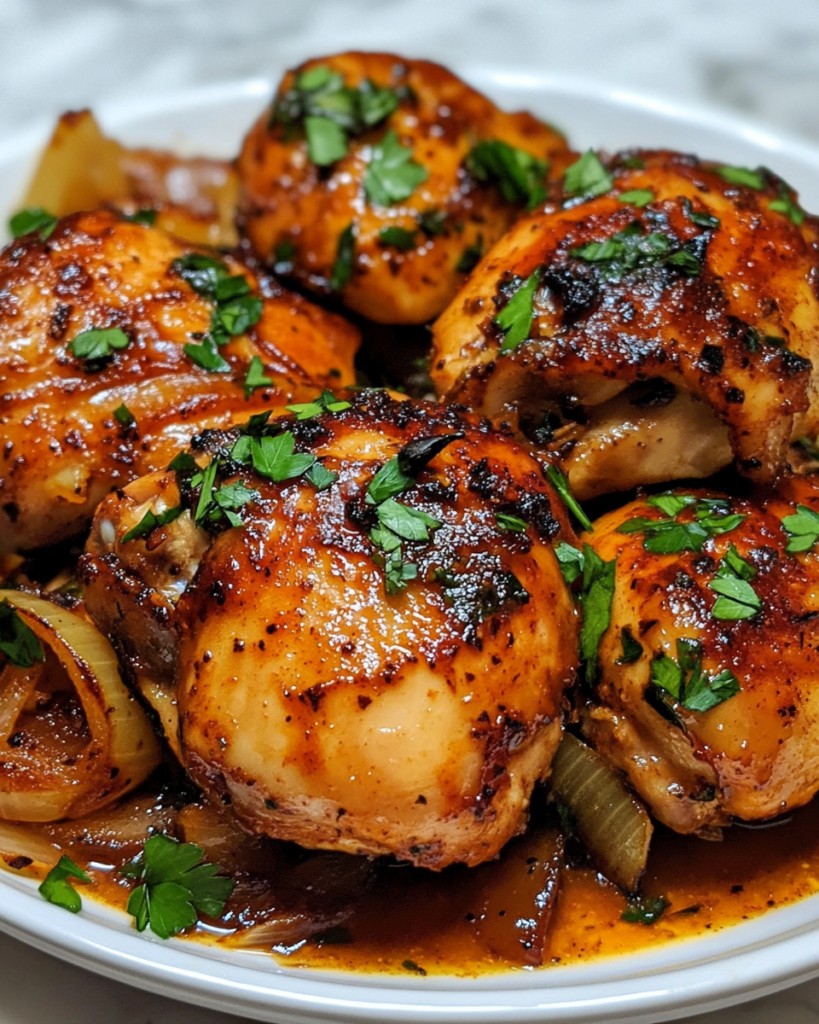
Smoky Paprika Chicken Skillet brings deep savory aroma, tender chicken, soft onion, garlic, and richly seasoned sauce together inside one sturdy pan. Sweet paprika carries gentle warmth, while smoked paprika adds wood-fired character that settles into every bite. A brief stovetop simmer allows chicken juices, broth, and tomato to mingle into a silky coating perfect beside rice, roasted potatoes, or warm bread.
This hearty skillet supper suits busy evenings since preparation stays straightforward and cleanup stays light. Boneless chicken thighs remain juicy during cooking, though chicken breast also performs nicely with careful timing. Garlic and onion soften into the sauce, bringing mellow sweetness that balances paprika’s earthy profile. A final scattering of parsley adds freshness across the finished pan.
Ingredients Overview
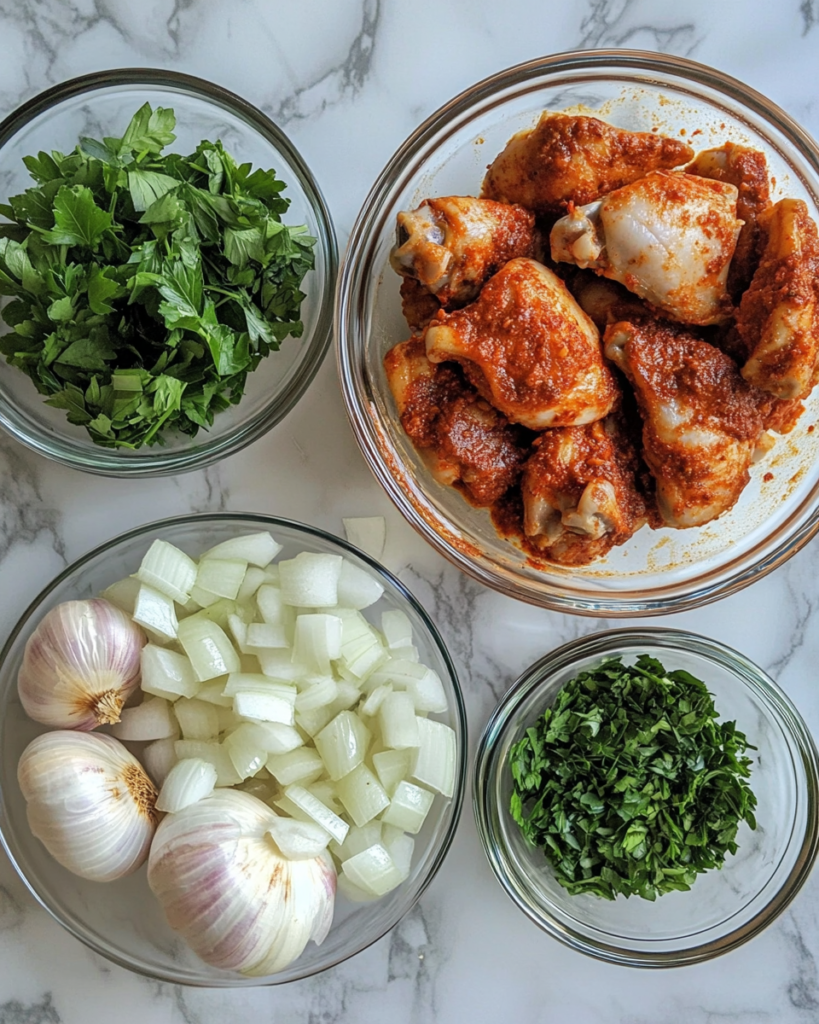
Paprika stands at the center of this skillet supper. Sweet paprika supplies mild pepper flavor alongside vibrant reddish color, while smoked paprika contributes campfire depth. Combining both varieties creates layered seasoning rather than sharp heat. Garlic and onion round out the savory foundation, gradually softening during cooking until their flavors settle into the sauce.
Chicken thighs work particularly well since darker meat stays succulent throughout stovetop cooking. Boneless thighs absorb seasoning rapidly and resist drying during simmering. Chicken breast offers a leaner route, though shorter cooking prevents toughness. Olive oil assists browning and carries seasoning evenly across the pan surface.
Diced tomato and chicken broth form the sauce base. Tomato contributes gentle acidity that brightens the richer paprika notes. Broth loosens browned bits from the skillet, creating fuller flavor throughout the dish. A spoonful of tomato paste thickens the liquid slightly and intensifies color.
Fresh parsley provides contrast near serving time. Rice, mashed potatoes, buttered noodles, or crusty bread pair beautifully alongside this skillet since each option soaks up the savory sauce. For dairy richness, a small spoonful of sour cream stirred into individual portions creates a velvety finish without masking the smoky seasoning.
Bell pepper suits this recipe nicely as well. Red or yellow pepper softens into the sauce and adds subtle sweetness. Spinach can enter near the final simmer for additional greens. Since the recipe relies upon pantry staples, ingredient swaps remain simple while the overall character stays warm and comforting.
Ingredients
1 1/2 pounds boneless chicken thighs
1 tablespoon olive oil
1 small yellow onion, thinly sliced
3 garlic cloves, finely chopped
1 red bell pepper, sliced
1 tablespoon sweet paprika
1 teaspoon smoked paprika
1 tablespoon tomato paste
1 cup chicken broth
1 cup diced tomatoes
1 teaspoon kosher salt
1/2 teaspoon black pepper
1/2 teaspoon dried oregano
1 tablespoon chopped parsley
Cooked rice or potatoes for serving
Step-by-Step Instructions
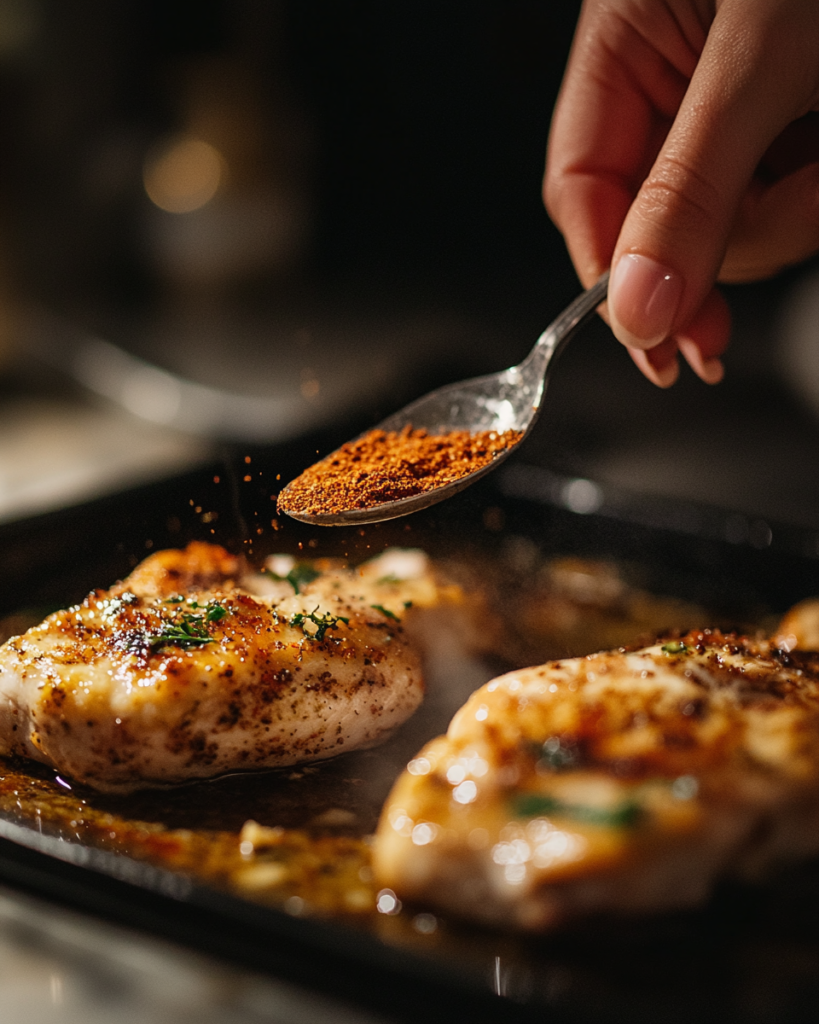
Pat chicken dry using paper towels. Dry surfaces brown far better than damp surfaces, giving richer skillet flavor. Sprinkle chicken with salt, black pepper, oregano, sweet paprika, and smoked paprika across both sides.
Warm olive oil inside a large skillet over medium-high heat. Once oil shimmers lightly, place chicken into the pan without crowding. Allow several minutes per side until rich golden patches appear. Resist shifting the chicken constantly since uninterrupted contact develops flavorful browning. Transfer browned chicken onto a plate after both sides carry color.
Lower heat slightly. Add onion and bell pepper into the same skillet. Stir occasionally while vegetables soften and gather browned bits left behind from the chicken. After roughly five minutes, stir garlic into the pan. Garlic cooks rapidly, so brief cooking prevents bitterness.
Mix tomato paste into the vegetables until evenly distributed. Pour broth and diced tomato into the skillet while scraping along the bottom using a wooden spoon. Those caramelized skillet bits dissolve into the sauce and deepen the savory profile considerably.
Return chicken alongside collected juices into the pan. Spoon sauce over each piece. Once gentle bubbling appears, reduce heat toward medium-low and cover loosely. Allow chicken to simmer roughly fifteen minutes, depending upon thickness. Chicken should reach an internal temperature of 165 degrees Fahrenheit, while the sauce thickens slightly around the edges.
If the sauce appears overly thick, stir in a splash of broth. If excess liquid remains, uncover the skillet during the final several minutes so moisture reduces naturally. Taste the sauce carefully, adjusting salt if necessary.
Scatter chopped parsley across the finished skillet shortly before serving. Serve alongside fluffy rice, roasted potatoes, buttered noodles, or toasted bread. The sauce settles beautifully into each side dish, carrying paprika flavor throughout every forkful.
Avoid overly intense heat during simmering since rapid boiling can tighten the chicken and reduce tenderness. Thin chicken breast portions require shorter simmering than thighs, so watch closely near the final cooking stage.
Tips, Variations & Substitutions
Boneless chicken thighs provide juicy texture and rich flavor, though chicken breast suits lighter suppers. When using breast meat, slice thicker portions horizontally for even cooking. Turkey cutlets also pair nicely with paprika seasoning and skillet sauce.
For deeper smoky character, stir a pinch of ground cumin into the spice mixture. Crushed red pepper flakes add moderate heat without overpowering the paprika profile. Fresh thyme or rosemary can replace oregano for an herb-forward variation.
Vegetable additions fit naturally into this skillet. Mushrooms, zucchini, or spinach blend smoothly into the sauce. Spinach should enter during the closing simmer so leaves wilt gently without turning mushy. Mushrooms benefit from separate browning before broth enters the skillet.
Dairy additions create richer texture. A spoonful of sour cream stirred into plated portions softens the smoky edge and thickens the sauce slightly. Heavy cream also works during the closing simmer, though modest quantities keep the dish balanced.
For lower-carbohydrate serving, pair the skillet beside cauliflower mash or sautéed green beans. Rice, egg noodles, couscous, and roasted potatoes all absorb the sauce beautifully for heartier suppers.
Leftovers reheat well inside a covered skillet over gentle heat. Add a small splash of broth during reheating so the sauce stays silky rather than overly thick.
Serving Ideas & Occasions
Smoky Paprika Chicken Skillet fits relaxed family suppers, chilly evening meals, or casual weekend gatherings. Since preparation remains straightforward, the recipe also suits weeknight cooking when lengthy kitchen sessions feel impractical.
Steamed rice remains a classic pairing since grains absorb the paprika sauce beautifully. Roasted baby potatoes bring crisp edges and earthy flavor that complement the smoky seasoning. Buttered noodles provide softer texture and mild richness, while crusty bread works beautifully for soaking every bit of sauce from the skillet.
A crisp green salad with cucumber and vinaigrette balances the savory richness nicely. Roasted carrots or green beans also pair naturally beside the chicken. Sparkling water with lemon, light iced tea, or dry white wine all accompany the skillet comfortably without masking the paprika flavor.
This skillet travels well for shared meals and reheats smoothly for lunch portions during the following day.
Nutritional & Health Notes
Chicken supplies substantial protein that supports fullness and balanced meals. Thigh meat carries slightly richer flavor and modestly higher fat than chicken breast, though either selection can fit varied eating patterns. Olive oil contributes heart-friendly unsaturated fat, while garlic and onion add aromatic depth without excessive calories.
Paprika contains natural antioxidants alongside vivid color compounds. Tomato contributes vitamin C and gentle acidity, balancing the richer savory elements within the sauce. Bell pepper adds fiber and additional nutrients while softening into the skillet mixture.
Serving this dish beside vegetables or whole grains creates a balanced plate with protein, carbohydrates, and fiber. Rice and potatoes both suit the recipe comfortably, though portion size adjustments can tailor the meal toward lighter or heartier appetites.
Since the recipe relies upon stovetop cooking rather than deep frying, the final dish stays satisfying without excessive grease. Lower-sodium broth can reduce overall salt content if preferred.
FAQs
Can chicken breast replace chicken thighs?
Chicken breast substitutes nicely within this skillet, though careful timing remains important. Breast meat cooks faster and contains less fat than thighs, so prolonged simmering may create dryness. Thicker breasts benefit from slicing horizontally into thinner cutlets before seasoning and browning. After returning breast meat into the sauce, monitor closely and remove from heat shortly after reaching safe internal temperature. The paprika sauce still delivers substantial flavor, while the lighter chicken texture creates a slightly leaner supper. Resting the chicken briefly before serving also helps retain moisture inside each portion.
Which paprika variety works nicely here?
A combination of sweet paprika and smoked paprika creates balanced flavor throughout the skillet. Sweet paprika contributes mild pepper notes and vibrant reddish color, while smoked paprika supplies wood-fired depth. Using solely smoked paprika can create overly intense flavor, particularly during longer simmering. Hungarian-style sweet paprika pairs beautifully with chicken and tomato, though standard grocery varieties also perform well. Hot paprika can enter the seasoning blend for guests who appreciate stronger heat, though moderate quantities prevent bitterness. Fresh paprika carries fuller aroma than older spice jars sitting unused for extended periods.
Can this skillet supper enter the oven?
Yes. After browning the chicken and assembling the sauce on the stovetop, the skillet can transfer into a 375-degree Fahrenheit oven. Covered baking usually requires roughly twenty minutes, depending upon chicken thickness. Oven finishing distributes heat gently and allows flavors to settle together comfortably. Oven-safe cast iron performs particularly well for this route since the pan retains heat evenly. During the closing several minutes, uncovering the skillet thickens the sauce slightly. Internal chicken temperature should still reach 165 degrees Fahrenheit before serving.
Which side dishes pair nicely alongside this recipe?
Rice remains a traditional companion since grains soak up the smoky tomato sauce beautifully. Roasted potatoes bring crisp texture and earthy flavor that balance the tender chicken. Buttered noodles, couscous, or creamy polenta also pair comfortably beside the skillet. Vegetable choices such as roasted broccoli, green beans, or cucumber salad brighten the plate and contrast the savory richness. Warm bread suits casual suppers particularly well because the sauce carries substantial flavor worth savoring fully. Simple side dishes generally work best so the paprika chicken stays central on the table.
Can leftovers stay inside the refrigerator?
Leftovers store comfortably inside an airtight container for roughly three days. During reheating, gentle stovetop warmth helps preserve chicken tenderness better than intense microwave heat. Adding a small splash of broth prevents the sauce from turning overly thick. Since paprika flavor deepens slightly overnight, reheated portions often taste even richer the following day. Rice or potatoes can store separately if preferred, helping each component maintain pleasant texture. Freezing also works, though creamy additions such as sour cream should enter after thawing rather than before storage.
How can the sauce become thicker?
Several simple methods create thicker sauce texture. Allowing the skillet to simmer uncovered during the final minutes reduces excess liquid naturally. Stirring an additional spoonful of tomato paste into the sauce also increases body while strengthening tomato richness. Cornstarch slurry offers another route: combine one teaspoon cornstarch with cool water, then stir gradually into simmering liquid until desired consistency appears. Avoid rapid boiling during thickening since intense heat may toughen the chicken. The sauce should coat a spoon lightly without turning excessively heavy.
Is this recipe suitable for meal preparation?
This skillet fits meal preparation beautifully since flavors remain balanced after reheating. Portion cooked chicken, sauce, and rice into separate containers for quick weekday lunches or suppers. Vegetables such as green beans or roasted carrots can accompany each portion for balanced meals throughout the week. Since the sauce retains moisture well, reheated chicken usually stays tender rather than dry. Cooling the skillet fully before refrigeration helps preserve texture and food safety. Fresh parsley added after reheating brightens stored portions nicely.