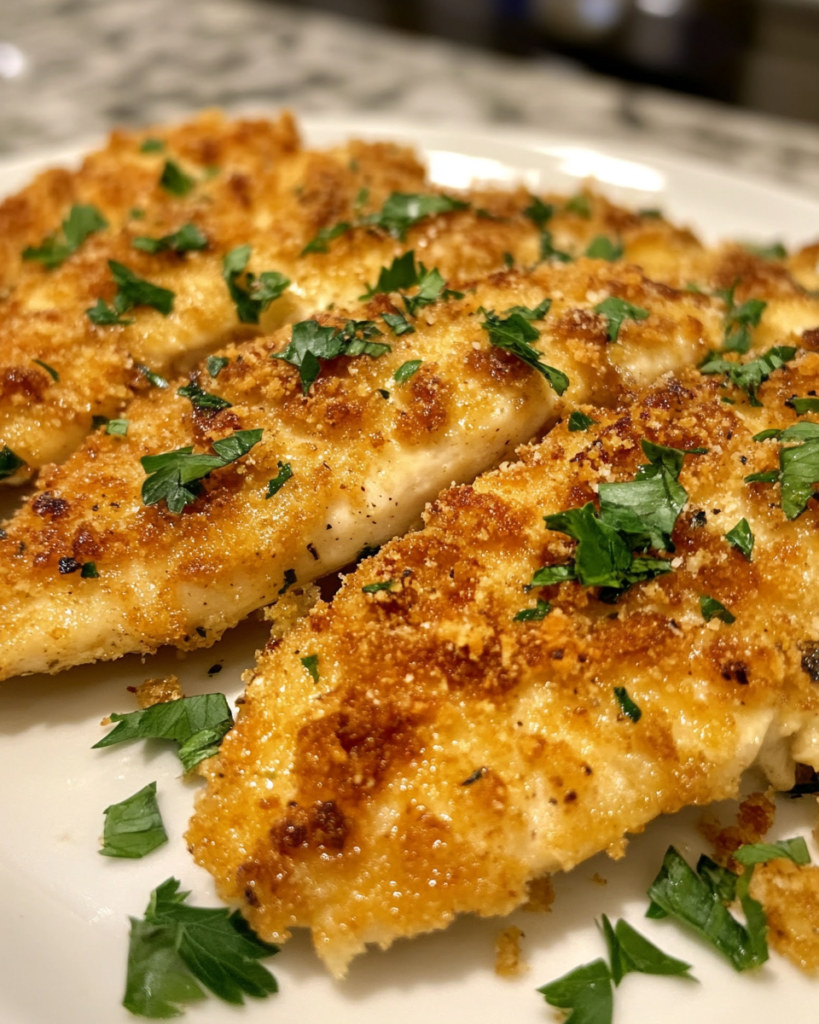
Garlic Parmesan Crispy Chicken brings together crunchy coating, rich cheese, and deep garlic flavor in every bite. The chicken turns golden in the oven while the Parmesan forms a savory crust that pairs beautifully with juicy meat inside. This dish works for weeknight dinners, relaxed family meals, or casual gatherings with friends.
One reason this recipe stays popular is the balance between texture and flavor. The coating stays crisp while the garlic butter keeps the chicken moist. Parmesan adds salty richness without feeling heavy, and a touch of seasoning rounds out the entire dish.
Another reason cooks enjoy this recipe is flexibility. Chicken breasts or thighs both work nicely, and the coating can shift slightly depending on pantry staples. It pairs well with vegetables, pasta, salads, or roasted potatoes, giving plenty of serving choices without extra stress in the kitchen.
Ingredients Overview
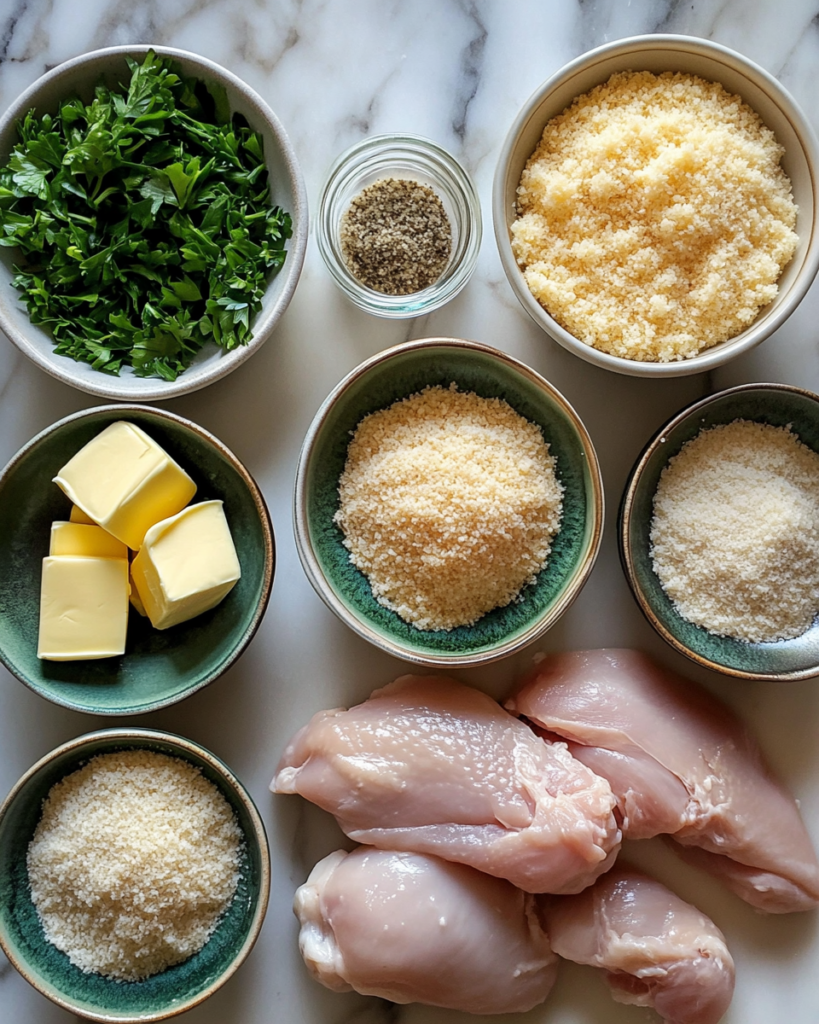
The chicken forms the heart of this recipe, so fresh boneless chicken breasts or thighs work nicely. Breasts give a leaner texture with larger slices, while thighs stay slightly richer and juicier during baking. Thin pieces cook more evenly and help the crust stay crisp rather than soggy.
Parmesan cheese plays a major role in the coating. Freshly grated Parmesan melts into the breadcrumbs and forms a savory crust with nutty flavor. Pre-shredded cheese can work, though fresh Parmesan usually melts more evenly and creates stronger flavor.
Panko breadcrumbs help create the crunchy exterior. Their lighter texture gives a crisp coating without becoming dense. Regular breadcrumbs still work if needed, though the crust may feel slightly softer.
Garlic adds warmth and depth throughout the dish. Fresh garlic gives stronger flavor than garlic powder, though a small amount of garlic powder inside the breadcrumb mixture helps spread flavor evenly across the chicken.
Eggs help the coating stick firmly to the meat. A light flour coating before dipping into egg also helps the crumbs cling during baking.
Italian seasoning, paprika, salt, and black pepper round out the flavor. Paprika adds gentle color while Italian herbs add subtle aroma. Butter and olive oil help the crust brown beautifully in the oven.
For substitutions, gluten-free breadcrumbs work nicely for gluten-sensitive diets. Pecorino Romano can replace Parmesan for a sharper finish. Chicken tenders also work well for smaller portions or quicker cooking.
Ingredients
2 large boneless chicken breasts, sliced in half lengthwise
1 cup panko breadcrumbs
3/4 cup freshly grated Parmesan cheese
3 cloves garlic, minced
1 teaspoon garlic powder
1 teaspoon Italian seasoning
1/2 teaspoon paprika
1 teaspoon salt
1/2 teaspoon black pepper
1/2 cup all-purpose flour
2 large eggs
2 tablespoons milk
3 tablespoons melted butter
2 tablespoons olive oil
2 tablespoons chopped parsley
Cooking spray
Step-by-Step Instructions
Start by heating the oven to 425°F. Line a baking sheet with parchment paper or lightly grease it with cooking spray. A hot oven helps the coating turn crisp rather than soft.
Pat the chicken dry using paper towels. Moisture on the surface can prevent the crust from browning properly. Slice thick chicken breasts horizontally so each piece cooks evenly without drying out.
Place the flour in one shallow bowl. In a second bowl, whisk together the eggs and milk. In a third bowl, combine panko breadcrumbs, Parmesan cheese, minced garlic, garlic powder, Italian seasoning, paprika, salt, and black pepper.
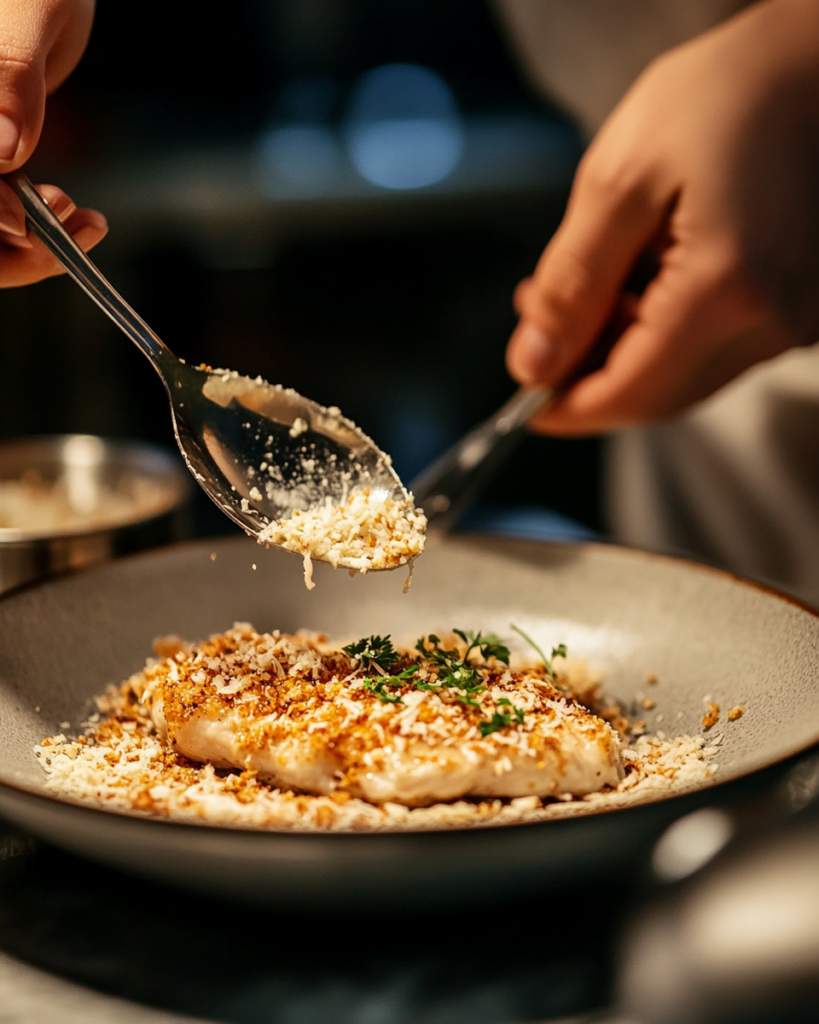
Dip each chicken piece into the flour first, shaking off extra flour gently. Next, coat it in the egg mixture. Finally, press the chicken firmly into the breadcrumb mixture so every side gets coated evenly. Pressing the crumbs lightly helps them stay attached during baking.
Arrange the coated chicken pieces on the prepared baking sheet. Leave slight space between pieces so hot air can circulate properly. Crowding the pan may cause steaming instead of crisp browning.
Drizzle melted butter and olive oil across the chicken. This step helps the crust turn deeply golden while adding rich flavor.
Bake for 18 to 22 minutes, depending on thickness. Flip the chicken halfway through cooking for even crispness. The coating should appear golden brown and crisp. The internal temperature should reach 165°F in the thickest section.
For extra crunch, place the chicken under the broiler for 1 to 2 minutes at the end. Watch closely during this stage since Parmesan can brown rapidly.
After baking, let the chicken rest for several minutes before serving. Resting allows the juices to settle inside the meat instead of spilling onto the plate.
A frequent mistake comes from overly thick chicken pieces. Thick cuts may brown outside before fully cooking inside. Another common issue is skipping the flour coating, which may cause the crust to slide off during baking.
Sprinkle chopped parsley across the finished chicken for fresh flavor and color. Serve immediately while the crust still feels crisp.
Tips, Variations & Substitutions
For extra crisp texture, place the breaded chicken on a wire rack set over the baking sheet. Hot air moves around the entire piece, helping the underside stay crunchy rather than soft.
Chicken thighs create richer flavor and stay very juicy during cooking. If using thighs, cooking time may rise slightly depending on thickness.
Air fryers also work beautifully for this recipe. Cook the chicken at 400°F for about 14 to 16 minutes, flipping halfway through. Lightly spray the coating with oil before cooking for deeper browning.
Spicy seasoning can shift the flavor profile nicely. Add cayenne pepper or crushed red pepper flakes to the breadcrumb mixture for gentle heat.
For lower-carb meals, crushed pork rinds or almond flour can replace breadcrumbs. The texture changes slightly, though the chicken still forms a flavorful crust.
Fresh herbs such as basil, thyme, or oregano can join the breadcrumb mixture for stronger herb flavor. Lemon zest also adds bright contrast beside the Parmesan and garlic.
Mozzarella or Asiago cheese can replace part of the Parmesan for a softer cheese flavor. Romano creates a sharper finish with stronger saltiness.
Leftover chicken reheats nicely in the oven or air fryer. Avoid microwaving when possible since the crust may soften rapidly.
Serving Ideas & Occasions
Garlic Parmesan Crispy Chicken fits many meal settings. It works beautifully for family dinners, game nights, or casual weekend meals. Since the flavor stays rich yet familiar, both children and adults usually enjoy it.
For side dishes, roasted potatoes pair naturally with the crunchy coating. Garlic mashed potatoes, buttered noodles, or creamy risotto also work nicely. Lighter sides such as Caesar salad, roasted broccoli, green beans, or cucumber salad balance the richness of the Parmesan.
This chicken also fits sandwiches and wraps. Slice the chicken and place it inside toasted bread with lettuce, tomato, and garlic aioli for a hearty lunch option.
Sparkling water with lemon, iced tea, or crisp white wine pairs pleasantly beside the savory coating. During colder months, this dish feels warm and comforting, while summer servings pair nicely with fresh salads and grilled vegetables.
Nutritional & Health Notes
Garlic Parmesan Crispy Chicken offers a satisfying balance of protein, fats, and carbohydrates. Chicken breast supplies lean protein that supports fullness and muscle maintenance. Parmesan cheese contributes calcium along with savory flavor.
Baking rather than deep frying lowers excess oil while still giving crisp texture. Using olive oil and moderate butter helps the coating brown without becoming greasy.
For lighter meals, serve the chicken beside vegetables or salads rather than heavier starches. Whole wheat breadcrumbs may add slightly more fiber, while reduced-fat Parmesan can lower fat content modestly.
Garlic contains natural compounds connected with savory aroma and depth of flavor. Herbs and spices also add flavor without requiring large amounts of extra salt.
Portion size matters since Parmesan and breadcrumbs can raise sodium and carbohydrate levels. Pairing the chicken with fresh vegetables helps create a balanced plate with varied textures and nutrients.
FAQs
Can I prepare the chicken ahead of time?
Yes, the chicken can be breaded several hours before baking. Arrange the coated pieces on a tray and cover lightly before placing them in the refrigerator. Chilling the coated chicken often helps the crust stick more firmly during baking. When ready to cook, place the tray directly into the hot oven. If the chicken feels very cold from refrigeration, cooking may require an extra few minutes. Avoid adding the melted butter until just before baking so the coating stays crisp. This method works nicely for busy evenings or gatherings when cooking tasks need spacing throughout the day.
Why is my coating falling off during cooking?
Coating usually slips away when the breading steps move too quickly or the chicken surface stays wet. Dry the chicken first with paper towels before adding flour. The flour layer gives the egg mixture something to cling to, which helps the breadcrumbs stay attached later. Press the coating gently onto the chicken rather than sprinkling loosely. Another helpful step involves resting the breaded chicken for several minutes before baking. This short resting period allows the coating to settle onto the meat more firmly. Turning the chicken carefully halfway through baking also prevents large sections from separating.
Can I freeze Garlic Parmesan Crispy Chicken?
Yes, this recipe freezes nicely after cooking. Let the chicken cool completely before wrapping each piece individually or placing them into airtight containers. Frozen chicken usually keeps well for about two months. Reheat in a hot oven or air fryer rather than a microwave so the crust stays crisp. Baking at 375°F for about 15 minutes often restores much of the crunchy texture. If freezing uncooked breaded chicken, place pieces on a tray first until solid, then transfer them into freezer bags. This prevents the coating from sticking together during storage.
What dipping sauces pair nicely with this recipe?
Several sauces pair beautifully with the savory Parmesan coating. Garlic aioli creates rich flavor that matches the crispy crust. Marinara sauce adds bright tomato flavor and works especially well when serving the chicken with pasta. Ranch dressing gives a cool contrast beside the warm garlic notes. Honey mustard adds gentle sweetness without overpowering the dish. For lighter flavor, plain Greek yogurt mixed with herbs and lemon juice creates a creamy dipping option. Serving a few sauces together often works nicely during gatherings since guests can choose flavors based on personal taste.
Can I use chicken tenders instead of chicken breasts?
Chicken tenders work very nicely in this recipe and usually cook faster than larger cuts. Since tenders stay naturally thin, they crisp quickly while remaining juicy inside. Baking time generally falls between 12 and 15 minutes depending on thickness. Watch carefully near the end of cooking because smaller pieces brown rapidly. Tenders also work beautifully for party trays, wraps, or salads. Younger diners often enjoy the smaller portions as well. The breading process stays exactly the same, though slightly smaller breadcrumb batches may cover the tenders fully without extra waste.
How do I keep the chicken crispy after cooking?
Serving the chicken immediately gives the crispiest texture. If holding it briefly before dinner, place the chicken on a wire rack rather than directly on a plate. Air circulation helps prevent steam from softening the crust underneath. Avoid covering the chicken tightly with foil since trapped steam softens the breadcrumbs rapidly. Reheating leftovers in the oven or air fryer also helps restore crisp texture. Microwaves warm the chicken quickly but usually soften the crust. A short oven reheating period at moderate heat usually brings back much of the original crunch.
Can I cook this recipe in a skillet?
Yes, skillet cooking works nicely if preferred. Use a large heavy skillet with enough oil to lightly coat the bottom. Heat the pan over medium heat before adding the breaded chicken. Cook each side for several minutes until golden brown and fully cooked inside. Avoid very high heat since Parmesan can darken too quickly before the chicken finishes cooking. Thinner chicken pieces work especially well in skillets because they cook evenly without burning the crust. After cooking, place the chicken briefly on a wire rack or paper towels before serving.