Creamy Lemon Chicken Orzo combines tender chicken, silky sauce, bright citrus, and delicate pasta in a single skillet meal. The balance of savory chicken and fresh lemon creates a comforting dish with a light finish, while orzo absorbs flavor throughout cooking.
This recipe fits busy weeknights, casual family suppers, and relaxed gatherings. Each spoonful offers creamy texture without feeling overly heavy, and the ingredients are widely available in most grocery stores. The combination of chicken broth, cream, lemon, and Parmesan creates a rich yet balanced sauce that coats every piece of orzo.
Ingredients Overview
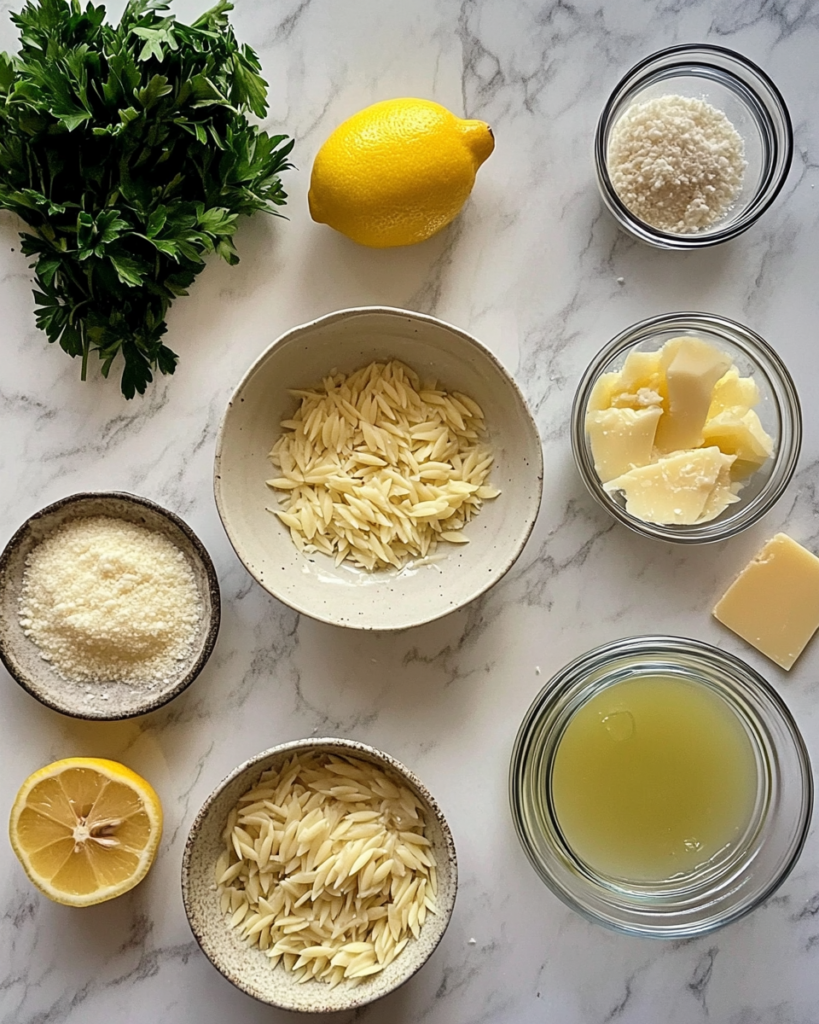
Several simple ingredients work together to create the signature character of Creamy Lemon Chicken Orzo. Boneless skinless chicken breasts or chicken thighs provide protein and savory depth. Thighs deliver slightly richer flavor, while breasts remain leaner and equally suitable.
Orzo serves as the foundation of the dish. Although it resembles rice, orzo is a pasta that cooks quickly and absorbs surrounding flavors. During simmering, it releases starch that contributes to the creamy consistency.
Fresh lemon plays a central role. Lemon juice supplies brightness that balances cream and cheese, while lemon zest contributes fragrant citrus notes. Freshly squeezed juice is preferable because bottled varieties can taste flat.
Heavy cream creates a smooth sauce. Half-and-half can replace part of the cream for a lighter texture. Parmesan adds salty, nutty character and helps thicken the sauce naturally.
Chicken broth forms the cooking liquid for the orzo and builds savory flavor throughout the skillet. Garlic and onion create an aromatic base that supports the remaining ingredients without overpowering them.
Fresh spinach is optional yet highly suitable. It wilts quickly and adds color along with additional nutrients. Fresh parsley contributes a clean finish and pairs naturally with lemon.
Together, these ingredients create a balanced dish featuring creamy texture, bright citrus, savory chicken, and tender pasta.
Ingredients
1 1/2 pounds boneless skinless chicken breasts, diced
1 teaspoon kosher salt
1/2 teaspoon black pepper
1 teaspoon garlic powder
2 tablespoons olive oil
1 small yellow onion, finely diced
3 cloves garlic, minced
1 cup uncooked orzo
2 1/2 cups chicken broth
1 cup heavy cream
1 lemon, zested
3 tablespoons fresh lemon juice
3/4 cup grated Parmesan cheese
2 cups fresh spinach
2 tablespoons chopped parsley
Extra Parmesan for serving
Step-by-Step Instructions
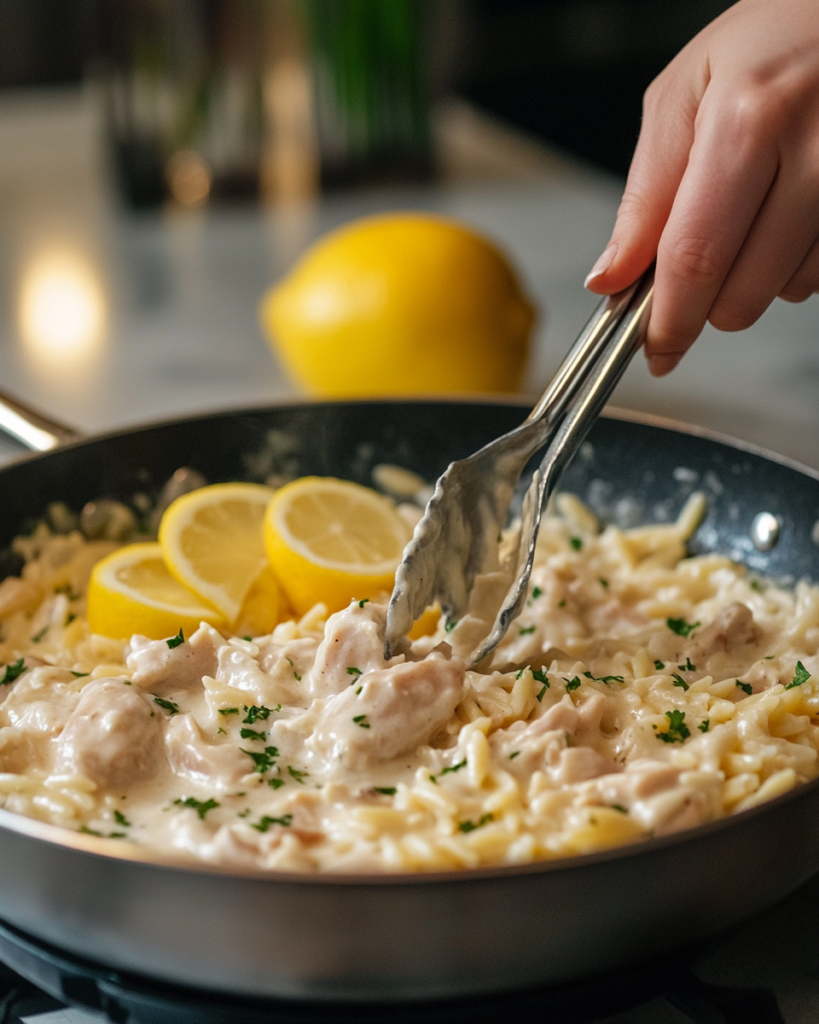
Pat the chicken dry with paper towels. Season evenly with salt, pepper, and garlic powder. Dry chicken browns more effectively and develops deeper flavor.
Heat a large skillet over medium-high heat. Add olive oil. Once the oil shimmers, add the chicken in a single layer. Cook for about 4 to 5 minutes, stirring occasionally, until lightly golden on several sides. Transfer the chicken to a plate.
Reduce heat to medium. Add onion to the skillet and cook for approximately 3 minutes until softened. Stir frequently. Add garlic and cook for about 30 seconds until fragrant.
Add the uncooked orzo and stir continuously for 1 minute. This brief toasting period contributes additional flavor and helps the pasta retain texture during simmering.
Pour in the chicken broth while scraping any browned bits from the skillet bottom. Return the chicken along with any accumulated juices. Bring the mixture to a gentle simmer.
Cook for 8 to 10 minutes, stirring frequently. Orzo tends to settle and can stick if left unattended. The pasta should become tender while absorbing much of the broth.
Lower the heat. Stir in the heavy cream, lemon zest, and lemon juice. Continue cooking for 2 to 3 minutes until the liquid appears slightly thickened.
Add the Parmesan gradually, stirring after each addition. The sauce should become smooth and creamy. If the mixture appears overly thick, add a small splash of broth.
Fold in the spinach and stir until wilted. Taste and adjust seasoning if desired.
The chicken should reach an internal temperature of 165°F (74°C). The orzo should feel tender without becoming mushy. Remove the skillet from the heat and allow it to rest for 2 minutes. During this brief resting period, the sauce thickens slightly.
Scatter parsley across the top and serve with additional Parmesan.
A frequent issue occurs when orzo cooks too long. Excessive cooking can cause the pasta to absorb too much liquid and lose texture. Stirring regularly and monitoring the simmer helps maintain the ideal consistency.
Tips, Variations & Substitutions
Chicken thighs can replace chicken breasts for richer flavor and slightly juicier texture. Both options perform well in this recipe.
For additional vegetables, stir in peas, asparagus pieces, or chopped kale during the final minutes of cooking. These additions pair naturally with the lemon and cream.
A lighter version can be prepared by replacing part of the heavy cream with milk or additional broth. The sauce will remain creamy, though slightly thinner.
Freshly grated Parmesan melts more smoothly than pre-shredded varieties. Pre-packaged cheese often contains anti-caking agents that affect texture.
For additional citrus character, increase the lemon zest slightly while keeping the juice quantity similar. This approach strengthens aroma without overwhelming acidity.
Those avoiding dairy can experiment with unsweetened dairy-free cream alternatives and a dairy-free grated cheese substitute. Texture may vary somewhat depending on the product selected.
When reheating leftovers, add a splash of broth or milk. Orzo continues absorbing liquid during storage, and extra moisture restores the creamy consistency.
A pinch of red pepper flakes contributes gentle warmth that contrasts pleasantly with the rich sauce and bright lemon notes.
Serving Ideas & Occasions
Creamy Lemon Chicken Orzo pairs nicely with a crisp green salad dressed with a simple vinaigrette. The freshness of leafy greens balances the richness of the sauce.
Roasted broccoli, green beans, or asparagus provide color and texture alongside the creamy pasta. Warm crusty bread is also suitable for soaking up extra sauce.
For beverages, sparkling water with lemon complements the citrus profile of the dish. Iced tea and light white wines also pair comfortably with the savory flavors.
This recipe works particularly well for family suppers, casual entertaining, and cooler evenings when a warm skillet meal feels especially satisfying. Because the entire dish cooks primarily in one pan, cleanup remains relatively manageable, which adds convenience during busy schedules.
The presentation is attractive enough for guests while remaining relaxed enough for everyday dining.
Nutritional & Health Notes
Creamy Lemon Chicken Orzo contains protein from chicken, carbohydrates from pasta, and fats from cream, olive oil, and Parmesan. This combination creates a balanced meal that can be filling and satisfying.
Adding spinach increases fiber along with vitamins and minerals. Additional vegetables can further broaden the nutritional profile without substantially changing the character of the dish.
Chicken breast offers a lean protein source, while chicken thighs contribute slightly higher fat content and richer flavor. Either choice can fit different dietary preferences.
Portion size plays an important role because creamy pasta dishes can be energy-dense. Pairing the meal with vegetables or salad creates additional balance across the plate.
Fresh lemon contributes flavor without requiring excessive salt. The bright citrus notes help balance the richness of cream and cheese while keeping the overall profile lively and pleasant.
FAQs
Can I prepare Creamy Lemon Chicken Orzo ahead of time?
Creamy Lemon Chicken Orzo can be prepared several hours ahead and reheated before serving. Because orzo continues absorbing liquid during storage, the texture becomes thicker over time. When reheating, stir in a small amount of broth, milk, or cream until the desired consistency returns. Gentle heat works better than high heat because dairy-based sauces can separate if warmed too aggressively. Store the dish in a covered container within the refrigerator and consume within several days for optimal quality. Fresh parsley can be added shortly before serving for a fresher appearance and flavor.
Which chicken cut works most successfully?
Both chicken breast and chicken thigh meat perform very well. Chicken breasts provide a leaner result with a lighter texture, while thighs contribute richer flavor and remain juicy even if slightly overcooked. If selecting thighs, trim excess fat before cooking. Uniformly sized pieces help everything cook evenly. Regardless of the cut selected, verifying an internal temperature of 165°F is important. The choice largely depends on personal preference because the creamy lemon sauce complements either option beautifully.
Can frozen spinach be used?
Frozen spinach is a suitable alternative when fresh spinach is unavailable. Thaw it completely and squeeze out excess moisture before adding it to the skillet. Excess water can dilute the sauce and affect consistency. Because frozen spinach is already softened, it only requires a brief warming period near the end of cooking. The flavor remains pleasant and blends well with the lemon and Parmesan components. Many cooks appreciate frozen spinach because it is convenient and available year-round.
How can I prevent the sauce from becoming too thick?
The primary reason for excessive thickness is continued absorption of liquid by the orzo. Monitoring the simmer and stirring regularly helps control texture. If the sauce thickens beyond preference, simply add warm broth, milk, or cream a little at a time while stirring. Removing the skillet from heat promptly once the orzo becomes tender also helps. During storage, additional liquid is frequently needed before reheating. Small adjustments usually restore a smooth consistency quickly.
Can another pasta replace orzo?
Small pasta shapes such as ditalini, small shells, or acini di pepe can replace orzo if necessary. Cooking times may differ slightly depending on the pasta selected. Because each shape absorbs liquid differently, adjustments to broth quantities may also be required. Orzo remains the traditional choice for this style of skillet meal because it creates a particularly creamy texture. Still, alternative small pasta shapes can produce a delicious result when prepared carefully.
Is Creamy Lemon Chicken Orzo suitable for meal preparation?
This dish works quite well for meal preparation. Divide portions into airtight containers after cooling slightly. Refrigerate and reheat as needed throughout the week. Because the sauce thickens during storage, adding a small amount of broth or milk before reheating helps maintain texture. Many people find the flavors become even more integrated after resting overnight. Individual portions also simplify serving and reduce preparation time on busy days.
What can I add for additional flavor variety?
Several additions pair naturally with the existing ingredients. Sun-dried tomatoes contribute concentrated savory notes, while mushrooms add earthy depth. Fresh herbs such as dill, basil, or chives can introduce different aromatic qualities. A modest amount of red pepper flakes creates gentle warmth without overwhelming the lemon. Roasted vegetables also blend beautifully with the creamy sauce. These variations allow the dish to remain familiar while offering subtle changes in character from one preparation to another.
………………..