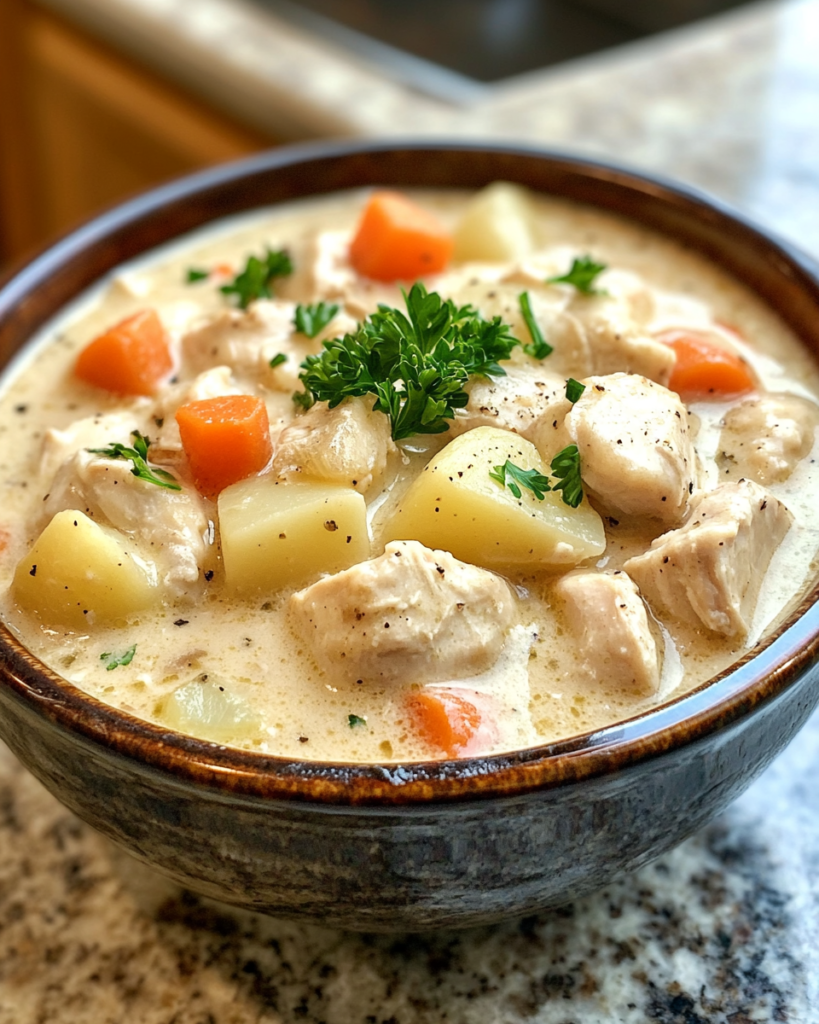
Creamy Chicken Potato Stew: 7 Simple Hearty Bowls

Posted on

Uncategorized

Difficulty

Prep time

Cooking time

Total time

Servings

Creamy Chicken Potato Stew brings together tender chicken, soft potatoes, sweet carrots, and a rich broth that turns silky after slow simmering. This cozy meal fits chilly evenings, family dinners, or quiet weekends when a warm pot on the stove fills the kitchen with comforting aromas.

The creamy texture comes from a mix of broth, milk, and potatoes that slowly break down while cooking. Every spoonful carries savory chicken, soft vegetables, and herbs that settle beautifully into the velvety base. The balance between hearty ingredients and smooth broth creates a filling meal without feeling too heavy.

This stew also works well for busy schedules because most of the cooking happens in one pot. A slow simmer gives the chicken time to become tender while the potatoes absorb flavor from garlic, onion, and herbs. Leftovers taste even richer after resting overnight, making this recipe practical for meal planning.

Ingredients Overview

Chicken forms the savory foundation of Creamy Chicken Potato Stew. Boneless chicken thighs bring richer flavor and stay juicy during simmering, though chicken breast works nicely for a lighter texture. Browning the chicken before simmering adds deeper flavor throughout the broth.

Potatoes help thicken the stew naturally. Yukon Gold potatoes are especially suitable because their creamy texture softens beautifully during cooking while still holding shape. Russet potatoes create a softer finish and slightly thicker broth because they release more starch.

Carrots and celery bring balance and mild sweetness. Onion and garlic provide aromatic depth that settles into the broth as the stew cooks slowly. Fresh thyme and parsley brighten the rich flavors while black pepper adds gentle warmth.

Chicken broth forms the liquid base. Whole milk and a small amount of heavy cream create the signature creamy finish without becoming overly dense. A spoonful of flour helps stabilize the broth and gives the stew its smooth consistency.

Butter adds richness while olive oil prevents scorching during the initial browning stage. Frozen peas can be stirred in near the end for a touch of color and sweetness.

For substitutions, turkey works nicely instead of chicken. Dairy-free milk and oat cream can replace traditional dairy. Sweet potatoes offer a slightly sweeter variation, while mushrooms bring earthy depth for added texture.

Ingredients

1 1/2 pounds boneless chicken thighs, cut into bite-sized pieces
2 tablespoons olive oil
2 tablespoons butter
1 medium yellow onion, diced
3 cloves garlic, minced
3 medium carrots, sliced
2 celery stalks, sliced
2 tablespoons all-purpose flour
5 cups chicken broth
1 1/2 pounds Yukon Gold potatoes, peeled and cubed
1 teaspoon dried thyme
1 teaspoon salt
1/2 teaspoon black pepper
1 bay leaf
1 cup whole milk
1/2 cup heavy cream
1 cup frozen peas
2 tablespoons chopped fresh parsley

Step-by-Step Instructions

Pat the chicken dry with paper towels before cooking. Dry chicken browns more evenly and creates richer flavor in the pot. Heat olive oil and butter in a large Dutch oven over medium-high heat. Once the butter melts and begins to foam lightly, add the chicken in a single layer.

Cook the chicken for about 4 to 5 minutes, stirring occasionally, until lightly golden around the edges. The chicken does not need to finish cooking during this stage because it continues simmering later. Transfer the chicken to a plate and keep the browned bits in the pot since they add savory depth to the stew.

Lower the heat to medium. Add the onion, carrots, and celery. Cook for about 6 minutes until the vegetables soften slightly. Stir frequently so the onions become translucent without darkening too much. Add the garlic and cook for another 30 seconds until fragrant.

Sprinkle the flour over the vegetables and stir continuously for about 1 minute. The flour should coat the vegetables evenly without forming clumps. This step helps create the creamy texture later.

Slowly pour in the chicken broth while stirring constantly. Scrape the bottom of the pot to loosen the browned bits left from the chicken. Add the potatoes, thyme, salt, pepper, and bay leaf.

Return the chicken and any juices to the pot. Bring the stew to a gentle simmer, then lower the heat to medium-low. Cover partially with a lid and cook for 25 to 30 minutes. Stir occasionally to prevent the potatoes from sticking near the bottom.

The potatoes should become fork-tender while the chicken stays juicy. Some potato edges naturally soften into the broth, helping thicken the stew.

Pour in the milk and heavy cream during the final 10 minutes of cooking. Stir gently to combine. Avoid boiling the stew after adding dairy because high heat may cause separation.

Add the frozen peas and simmer gently for another 3 to 4 minutes until heated through. Remove the bay leaf before serving.

Taste the stew and adjust seasoning if needed. Scatter fresh parsley across the top just before serving for a bright finish.

If the stew becomes too thick after resting, stir in a splash of broth before reheating. If it feels thinner than desired, simmer uncovered for several additional minutes until the consistency thickens slightly.

Tips, Variations & Substitutions

For deeper flavor, brown the chicken in batches instead of overcrowding the pot. Crowded chicken releases moisture too quickly and prevents proper browning.

Yukon Gold potatoes hold shape beautifully, though russets create a softer texture. Red potatoes remain firmer and work nicely for chunkier stew.

Fresh thyme adds gentle herbal flavor, though rosemary gives the stew a woodsy character. A pinch of smoked paprika creates subtle warmth without overpowering the creamy broth.

For extra vegetables, stir in corn, mushrooms, spinach, or green beans during the final simmer. Mushrooms pair especially well with chicken and create a richer savory flavor.

Rotisserie chicken works nicely for faster preparation. Simply skip the browning step and stir shredded cooked chicken into the broth during the final 15 minutes.

For a dairy-free version, replace milk and cream with unsweetened oat milk and dairy-free cooking cream. The texture stays smooth while keeping the stew rich and satisfying.

A thicker consistency comes from lightly mashing several potato pieces against the side of the pot near the end of cooking. This releases natural starch into the broth.

Leftover stew stores well in the refrigerator for up to four days. Reheat slowly over medium-low heat while stirring occasionally.

Serving Ideas & Occasions

Creamy Chicken Potato Stew pairs beautifully with crusty bread, warm biscuits, or buttered dinner rolls that soak up the creamy broth. A crisp green salad with a light vinaigrette balances the richness of the stew nicely.

Roasted vegetables such as Brussels sprouts or green beans also complement the hearty flavors. For drinks, sparkling water with lemon, iced tea, or light white wine pair comfortably with the creamy texture.

This stew works wonderfully for family dinners, cold-weather gatherings, or casual Sunday meals. Since the recipe cooks in one pot, it also suits relaxed evenings when simple cleanup matters.

The rich broth and tender ingredients make this stew especially comforting during autumn and winter months. It also travels well for potlucks because the texture stays creamy even after resting for a while.

Nutritional & Health Notes

Creamy Chicken Potato Stew contains a balanced mix of protein, carbohydrates, and vegetables. Chicken provides satisfying protein that helps make the meal filling, while potatoes contribute fiber and potassium.

Carrots, celery, onions, and peas add vitamins and natural sweetness. Using broth instead of a fully cream-based liquid keeps the stew rich without becoming overly heavy.

Milk and cream create the smooth texture while adding calcium. Lighter milk may be substituted for a slightly lower-fat version, though the broth becomes thinner.

The one-pot preparation also keeps ingredient handling simple and practical for regular home cooking. Since the stew contains both protein and vegetables, it can serve as a complete meal without many additional sides.

Portion size influences overall nutrition, especially when paired with bread or biscuits. A moderate serving provides satisfying warmth and comfort while still feeling balanced.

FAQs

Can I cook Creamy Chicken Potato Stew ahead of time?

Yes, this stew works very well as a make-ahead meal. The flavors continue blending as the stew rests, often creating an even richer taste the following day. After cooking, allow the stew to cool slightly before transferring it into airtight containers. Refrigerate for up to four days. When reheating, warm the stew slowly over medium-low heat while stirring occasionally. The potatoes naturally absorb liquid during storage, so adding a splash of broth or milk helps restore the creamy consistency. Avoid reheating over very high heat because dairy-based broths can separate if overheated. Fresh parsley added after reheating brightens the flavor nicely before serving.

Which potatoes work nicely for this stew?

Yukon Gold potatoes are highly suitable because they become creamy while still holding their shape during simmering. Their buttery texture blends naturally into the broth without turning grainy. Russet potatoes also work, though they soften more quickly and create a thicker consistency since they release extra starch. Red potatoes stay firmer and create chunkier bites throughout the stew. If using smaller potatoes, cut them into evenly sized pieces so they cook at the same pace. Avoid overcooking the potatoes because they can break apart too much and create a mushy texture rather than a creamy stew.

Can I freeze Creamy Chicken Potato Stew?

This stew can be frozen, though the texture changes slightly because dairy and potatoes react differently after thawing. For smoother results, freeze the stew before adding the milk and cream. After thawing, reheat gently and stir in fresh dairy near the end. If freezing the fully finished stew, allow it to cool completely before transferring into freezer-safe containers. Leave a little space at the top because liquids expand during freezing. Thaw overnight in the refrigerator before reheating slowly on the stove. Stir frequently while warming to help the broth return to a creamy texture.

How do I thicken the stew naturally?

Potatoes naturally release starch as they simmer, helping create a creamy consistency without excessive thickening ingredients. For a thicker stew, mash several cooked potato chunks directly against the side of the pot and stir them back into the broth. Another method involves simmering the stew uncovered for several extra minutes so excess liquid reduces gradually. A small flour mixture at the beginning also helps stabilize the creamy texture. Cornstarch mixed with cold water may be stirred in near the end if additional thickening is preferred. Gentle simmering works better than rapid boiling for maintaining a smooth finish.

Can I use cooked chicken instead of raw chicken?

Cooked chicken works very well in this recipe and shortens preparation time. Rotisserie chicken is especially practical because it already carries savory flavor and tender texture. Simply prepare the vegetables and broth as directed, then stir shredded cooked chicken into the pot during the final 15 minutes of simmering. Since cooked chicken only needs warming through, adding it too early may cause it to become dry. Dark meat tends to remain juicier after reheating, though chicken breast also works nicely. This approach makes the recipe especially convenient for weeknight dinners.

What vegetables can I add to the stew?

Many vegetables blend beautifully into Creamy Chicken Potato Stew. Mushrooms create earthy flavor and pair naturally with chicken. Corn adds sweetness and color, while green beans contribute freshness and texture. Spinach or kale may be stirred in during the final few minutes for extra greens. Parsnips create a slightly sweet and hearty variation that works especially well during colder months. Frozen vegetables also work nicely because they cook quickly and save preparation time. Try adding vegetables gradually rather than overcrowding the pot so the broth stays balanced and creamy instead of becoming overly thick.

Why did my creamy broth separate?

Broth separation usually happens when dairy cooks over very high heat or boils too rapidly. After adding milk and cream, keep the stew at a gentle simmer rather than a rolling boil. Stir occasionally so the dairy blends smoothly throughout the broth. Full-fat dairy products generally remain more stable than lower-fat options during cooking. Another helpful step involves warming the milk slightly before adding it to the hot pot. If slight separation appears, gentle stirring over low heat often helps bring the texture back together. Maintaining moderate heat creates the smoothest and creamiest final result.

[rank_math_breadcrumb]

Creamy Chicken Potato Stew: 7 Simple Hearty Bowls

Photo of author
Author: Ava
Published:

Creamy Chicken Potato Stew brings together tender chicken, soft potatoes, sweet carrots, and a rich broth that turns silky after slow simmering. This cozy meal fits chilly evenings, family dinners, or quiet weekends when a warm pot on the stove fills the kitchen with comforting aromas.

The creamy texture comes from a mix of broth, milk, and potatoes that slowly break down while cooking. Every spoonful carries savory chicken, soft vegetables, and herbs that settle beautifully into the velvety base. The balance between hearty ingredients and smooth broth creates a filling meal without feeling too heavy.

This stew also works well for busy schedules because most of the cooking happens in one pot. A slow simmer gives the chicken time to become tender while the potatoes absorb flavor from garlic, onion, and herbs. Leftovers taste even richer after resting overnight, making this recipe practical for meal planning.

Ingredients Overview

Chicken forms the savory foundation of Creamy Chicken Potato Stew. Boneless chicken thighs bring richer flavor and stay juicy during simmering, though chicken breast works nicely for a lighter texture. Browning the chicken before simmering adds deeper flavor throughout the broth.

Potatoes help thicken the stew naturally. Yukon Gold potatoes are especially suitable because their creamy texture softens beautifully during cooking while still holding shape. Russet potatoes create a softer finish and slightly thicker broth because they release more starch.

Carrots and celery bring balance and mild sweetness. Onion and garlic provide aromatic depth that settles into the broth as the stew cooks slowly. Fresh thyme and parsley brighten the rich flavors while black pepper adds gentle warmth.

Chicken broth forms the liquid base. Whole milk and a small amount of heavy cream create the signature creamy finish without becoming overly dense. A spoonful of flour helps stabilize the broth and gives the stew its smooth consistency.

Butter adds richness while olive oil prevents scorching during the initial browning stage. Frozen peas can be stirred in near the end for a touch of color and sweetness.

For substitutions, turkey works nicely instead of chicken. Dairy-free milk and oat cream can replace traditional dairy. Sweet potatoes offer a slightly sweeter variation, while mushrooms bring earthy depth for added texture.

Ingredients

1 1/2 pounds boneless chicken thighs, cut into bite-sized pieces
2 tablespoons olive oil
2 tablespoons butter
1 medium yellow onion, diced
3 cloves garlic, minced
3 medium carrots, sliced
2 celery stalks, sliced
2 tablespoons all-purpose flour
5 cups chicken broth
1 1/2 pounds Yukon Gold potatoes, peeled and cubed
1 teaspoon dried thyme
1 teaspoon salt
1/2 teaspoon black pepper
1 bay leaf
1 cup whole milk
1/2 cup heavy cream
1 cup frozen peas
2 tablespoons chopped fresh parsley

Step-by-Step Instructions

Pat the chicken dry with paper towels before cooking. Dry chicken browns more evenly and creates richer flavor in the pot. Heat olive oil and butter in a large Dutch oven over medium-high heat. Once the butter melts and begins to foam lightly, add the chicken in a single layer.

Cook the chicken for about 4 to 5 minutes, stirring occasionally, until lightly golden around the edges. The chicken does not need to finish cooking during this stage because it continues simmering later. Transfer the chicken to a plate and keep the browned bits in the pot since they add savory depth to the stew.

Lower the heat to medium. Add the onion, carrots, and celery. Cook for about 6 minutes until the vegetables soften slightly. Stir frequently so the onions become translucent without darkening too much. Add the garlic and cook for another 30 seconds until fragrant.

Sprinkle the flour over the vegetables and stir continuously for about 1 minute. The flour should coat the vegetables evenly without forming clumps. This step helps create the creamy texture later.

Slowly pour in the chicken broth while stirring constantly. Scrape the bottom of the pot to loosen the browned bits left from the chicken. Add the potatoes, thyme, salt, pepper, and bay leaf.

Return the chicken and any juices to the pot. Bring the stew to a gentle simmer, then lower the heat to medium-low. Cover partially with a lid and cook for 25 to 30 minutes. Stir occasionally to prevent the potatoes from sticking near the bottom.

The potatoes should become fork-tender while the chicken stays juicy. Some potato edges naturally soften into the broth, helping thicken the stew.

Pour in the milk and heavy cream during the final 10 minutes of cooking. Stir gently to combine. Avoid boiling the stew after adding dairy because high heat may cause separation.

Add the frozen peas and simmer gently for another 3 to 4 minutes until heated through. Remove the bay leaf before serving.

Taste the stew and adjust seasoning if needed. Scatter fresh parsley across the top just before serving for a bright finish.

If the stew becomes too thick after resting, stir in a splash of broth before reheating. If it feels thinner than desired, simmer uncovered for several additional minutes until the consistency thickens slightly.

Tips, Variations & Substitutions

For deeper flavor, brown the chicken in batches instead of overcrowding the pot. Crowded chicken releases moisture too quickly and prevents proper browning.

Yukon Gold potatoes hold shape beautifully, though russets create a softer texture. Red potatoes remain firmer and work nicely for chunkier stew.

Fresh thyme adds gentle herbal flavor, though rosemary gives the stew a woodsy character. A pinch of smoked paprika creates subtle warmth without overpowering the creamy broth.

For extra vegetables, stir in corn, mushrooms, spinach, or green beans during the final simmer. Mushrooms pair especially well with chicken and create a richer savory flavor.

Rotisserie chicken works nicely for faster preparation. Simply skip the browning step and stir shredded cooked chicken into the broth during the final 15 minutes.

For a dairy-free version, replace milk and cream with unsweetened oat milk and dairy-free cooking cream. The texture stays smooth while keeping the stew rich and satisfying.

A thicker consistency comes from lightly mashing several potato pieces against the side of the pot near the end of cooking. This releases natural starch into the broth.

Leftover stew stores well in the refrigerator for up to four days. Reheat slowly over medium-low heat while stirring occasionally.

Serving Ideas & Occasions

Creamy Chicken Potato Stew pairs beautifully with crusty bread, warm biscuits, or buttered dinner rolls that soak up the creamy broth. A crisp green salad with a light vinaigrette balances the richness of the stew nicely.

Roasted vegetables such as Brussels sprouts or green beans also complement the hearty flavors. For drinks, sparkling water with lemon, iced tea, or light white wine pair comfortably with the creamy texture.

This stew works wonderfully for family dinners, cold-weather gatherings, or casual Sunday meals. Since the recipe cooks in one pot, it also suits relaxed evenings when simple cleanup matters.

The rich broth and tender ingredients make this stew especially comforting during autumn and winter months. It also travels well for potlucks because the texture stays creamy even after resting for a while.

Nutritional & Health Notes

Creamy Chicken Potato Stew contains a balanced mix of protein, carbohydrates, and vegetables. Chicken provides satisfying protein that helps make the meal filling, while potatoes contribute fiber and potassium.

Carrots, celery, onions, and peas add vitamins and natural sweetness. Using broth instead of a fully cream-based liquid keeps the stew rich without becoming overly heavy.

Milk and cream create the smooth texture while adding calcium. Lighter milk may be substituted for a slightly lower-fat version, though the broth becomes thinner.

The one-pot preparation also keeps ingredient handling simple and practical for regular home cooking. Since the stew contains both protein and vegetables, it can serve as a complete meal without many additional sides.

Portion size influences overall nutrition, especially when paired with bread or biscuits. A moderate serving provides satisfying warmth and comfort while still feeling balanced.

FAQs

Can I cook Creamy Chicken Potato Stew ahead of time?

Yes, this stew works very well as a make-ahead meal. The flavors continue blending as the stew rests, often creating an even richer taste the following day. After cooking, allow the stew to cool slightly before transferring it into airtight containers. Refrigerate for up to four days. When reheating, warm the stew slowly over medium-low heat while stirring occasionally. The potatoes naturally absorb liquid during storage, so adding a splash of broth or milk helps restore the creamy consistency. Avoid reheating over very high heat because dairy-based broths can separate if overheated. Fresh parsley added after reheating brightens the flavor nicely before serving.

Which potatoes work nicely for this stew?

Yukon Gold potatoes are highly suitable because they become creamy while still holding their shape during simmering. Their buttery texture blends naturally into the broth without turning grainy. Russet potatoes also work, though they soften more quickly and create a thicker consistency since they release extra starch. Red potatoes stay firmer and create chunkier bites throughout the stew. If using smaller potatoes, cut them into evenly sized pieces so they cook at the same pace. Avoid overcooking the potatoes because they can break apart too much and create a mushy texture rather than a creamy stew.

Can I freeze Creamy Chicken Potato Stew?

This stew can be frozen, though the texture changes slightly because dairy and potatoes react differently after thawing. For smoother results, freeze the stew before adding the milk and cream. After thawing, reheat gently and stir in fresh dairy near the end. If freezing the fully finished stew, allow it to cool completely before transferring into freezer-safe containers. Leave a little space at the top because liquids expand during freezing. Thaw overnight in the refrigerator before reheating slowly on the stove. Stir frequently while warming to help the broth return to a creamy texture.

How do I thicken the stew naturally?

Potatoes naturally release starch as they simmer, helping create a creamy consistency without excessive thickening ingredients. For a thicker stew, mash several cooked potato chunks directly against the side of the pot and stir them back into the broth. Another method involves simmering the stew uncovered for several extra minutes so excess liquid reduces gradually. A small flour mixture at the beginning also helps stabilize the creamy texture. Cornstarch mixed with cold water may be stirred in near the end if additional thickening is preferred. Gentle simmering works better than rapid boiling for maintaining a smooth finish.

Can I use cooked chicken instead of raw chicken?

Cooked chicken works very well in this recipe and shortens preparation time. Rotisserie chicken is especially practical because it already carries savory flavor and tender texture. Simply prepare the vegetables and broth as directed, then stir shredded cooked chicken into the pot during the final 15 minutes of simmering. Since cooked chicken only needs warming through, adding it too early may cause it to become dry. Dark meat tends to remain juicier after reheating, though chicken breast also works nicely. This approach makes the recipe especially convenient for weeknight dinners.

What vegetables can I add to the stew?

Many vegetables blend beautifully into Creamy Chicken Potato Stew. Mushrooms create earthy flavor and pair naturally with chicken. Corn adds sweetness and color, while green beans contribute freshness and texture. Spinach or kale may be stirred in during the final few minutes for extra greens. Parsnips create a slightly sweet and hearty variation that works especially well during colder months. Frozen vegetables also work nicely because they cook quickly and save preparation time. Try adding vegetables gradually rather than overcrowding the pot so the broth stays balanced and creamy instead of becoming overly thick.

Why did my creamy broth separate?

Broth separation usually happens when dairy cooks over very high heat or boils too rapidly. After adding milk and cream, keep the stew at a gentle simmer rather than a rolling boil. Stir occasionally so the dairy blends smoothly throughout the broth. Full-fat dairy products generally remain more stable than lower-fat options during cooking. Another helpful step involves warming the milk slightly before adding it to the hot pot. If slight separation appears, gentle stirring over low heat often helps bring the texture back together. Maintaining moderate heat creates the smoothest and creamiest final result.
Name

Lorem ipsum dolor sit amet, consectetur adipiscing elit. Suspendisse varius enim in eros elementum tristique. Duis cursus, mi quis viverra ornare, eros dolor interdum nulla, ut commodo diam libero vitae erat.

You Might Also Like...

Buffalo Ranch Chicken Thighs: 5 Quick Cozy Bakes

Buffalo Ranch Chicken Thighs: 5 Quick Cozy Bakes

Crispy Air Fryer Chicken Thighs: 5 Amazing Cozy Meals

Crispy Air Fryer Chicken Thighs: 5 Amazing Cozy Meals

Lemon Herb Oven Chicken Thighs: 5 Remarkable Cozy Plates

Lemon Herb Oven Chicken Thighs: 5 Remarkable Cozy Plates

Creamy Garlic Parmesan Chicken: 5 Amazing Happy Plates

Creamy Garlic Parmesan Chicken: 5 Amazing Happy Plates

Tags:

You might also like these recipes

Leave a Comment