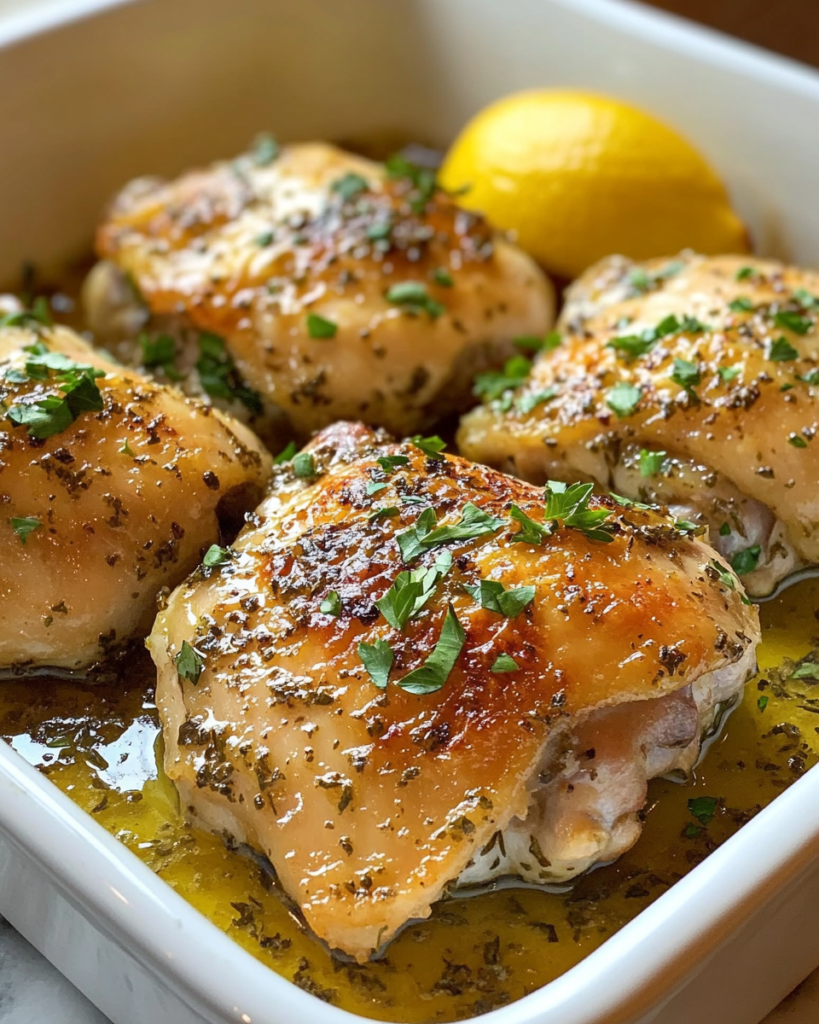
Lemon Herb Oven Chicken Thighs combine juicy roasted chicken with bright citrus flavor, garlic, and fragrant herbs for a comforting meal that feels both fresh and hearty. The oven creates crispy golden skin while the lemon and herb mixture coats the chicken with rich savory flavor.
Chicken thighs are especially dependable for oven roasting because they stay tender during cooking. The natural fat in the thighs helps the meat remain juicy while the skin becomes crisp and flavorful. Fresh lemon juice balances the richness perfectly, creating a meal that tastes satisfying without becoming too heavy.
Another reason many home cooks enjoy Lemon Herb Oven Chicken Thighs is the simple preparation. Most of the ingredients are common pantry staples, and the oven handles most of the cooking process. This recipe works beautifully for family dinners, meal prep, or casual gatherings.
The aroma of roasted garlic, herbs, and lemon filling the kitchen during cooking makes the dish especially inviting. These chicken thighs pair easily with vegetables, potatoes, salads, or rice, making them suitable for many styles of meals throughout the year.
Ingredients Overview
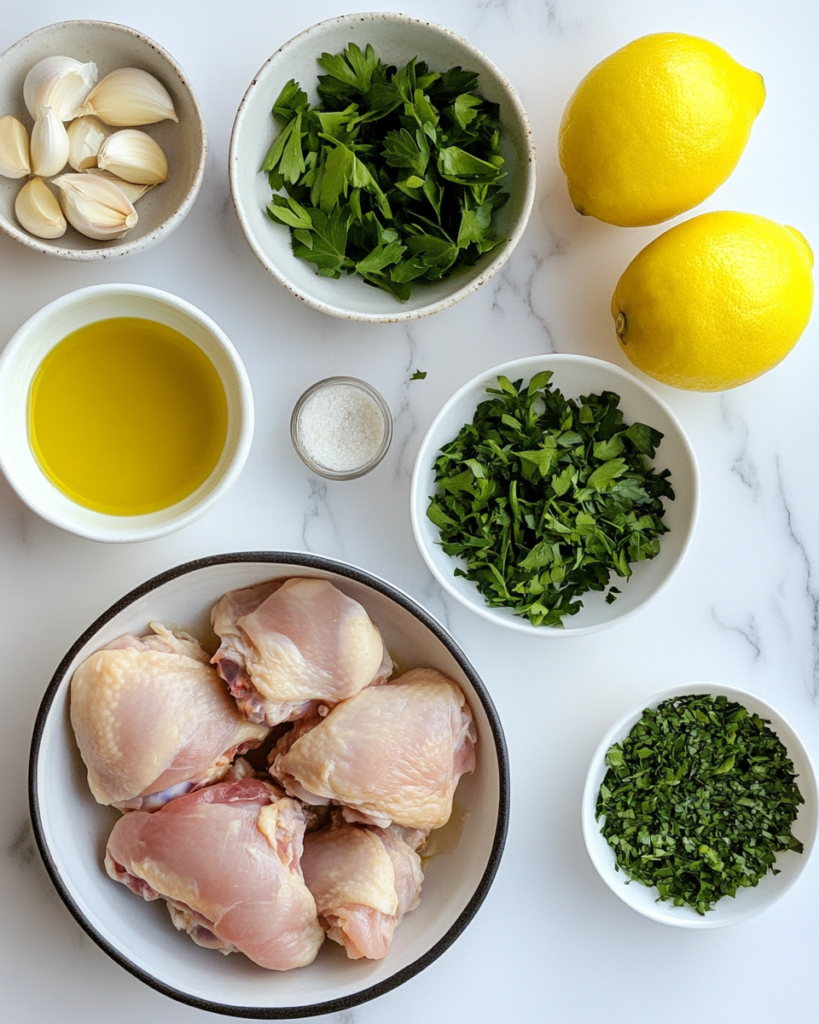
Bone-in, skin-on chicken thighs work best for this recipe because the skin crisps beautifully while protecting the meat from drying out. Boneless thighs may also be used, though the cooking time becomes shorter.
Fresh lemon juice gives the chicken its bright citrus flavor. Lemon zest adds deeper citrus aroma and strengthens the flavor throughout the dish. Bottled lemon juice may work in a pinch, though fresh lemon provides the cleanest taste.
Garlic creates savory depth that balances the citrus. Fresh minced garlic softens during roasting and blends naturally into the herb mixture.
Olive oil helps the herbs coat the chicken evenly while supporting crisp golden skin during roasting. The oil also keeps the seasoning mixture from drying out in the oven.
Fresh herbs such as parsley, thyme, and rosemary complement the lemon flavor especially well. Dried herbs may replace fresh herbs if necessary, though smaller amounts should be used because dried herbs are more concentrated.
Paprika adds gentle warmth and color without overpowering the lemon flavor. Salt and black pepper season the chicken fully and help create flavorful skin.
Chicken broth may be added to the baking dish to create extra moisture and light pan juices for spooning over the finished chicken. Some cooks also add sliced onions or lemon rounds to the roasting pan for extra flavor.
Ingredients
6 bone-in, skin-on chicken thighs
2 tablespoons olive oil
1 teaspoon salt
1/2 teaspoon black pepper
1 teaspoon paprika
4 cloves garlic, minced
1 tablespoon lemon zest
3 tablespoons fresh lemon juice
1 teaspoon dried thyme
1 teaspoon dried rosemary
1 tablespoon chopped fresh parsley
1/2 cup chicken broth
1 lemon, sliced
Step-by-Step Instructions
Begin by preheating the oven to 425 degrees Fahrenheit. Higher oven heat helps create crisp skin while roasting the chicken evenly.
Pat the chicken thighs dry thoroughly using paper towels. Dry skin is important because moisture may prevent proper browning during roasting. Place the chicken thighs in a large bowl or baking dish.
In a small bowl, combine olive oil, salt, black pepper, paprika, minced garlic, lemon zest, lemon juice, thyme, and rosemary. Stir until blended into a loose seasoning mixture.
Rub the lemon herb mixture thoroughly over the chicken thighs, coating both the skin and underside. Allow the chicken to rest for about 10 to 15 minutes if time allows so the flavors settle into the meat.
Arrange the chicken thighs skin-side up in a large baking dish or oven-safe skillet. Leave some space between each piece to allow heat circulation for crisp skin.
Pour the chicken broth carefully around the chicken rather than directly over the skin. This helps maintain moisture in the pan while allowing the skin to roast properly.
Scatter lemon slices around the chicken in the baking dish. The lemon softens during roasting and adds additional citrus aroma to the pan juices.
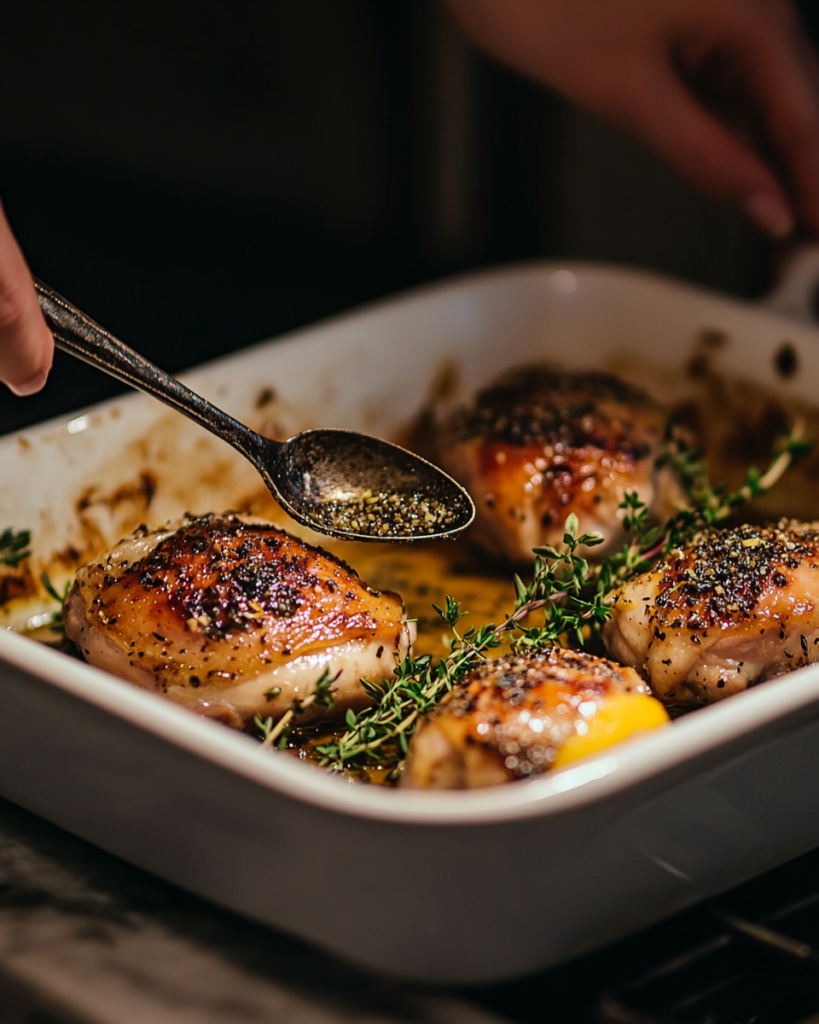
Place the dish into the oven and roast for 35 to 45 minutes depending on the size of the thighs. The chicken skin should become golden brown and crisp while the internal temperature reaches 165 degrees Fahrenheit near the bone.
Halfway through cooking, spoon a little pan juice around the chicken if desired, but avoid pouring too much liquid directly over the skin because this may soften the crisp texture.
If the skin needs more color near the end of cooking, place the dish under the broiler for 1 to 2 minutes while watching closely.
Remove the chicken from the oven and allow it to rest for about 5 minutes before serving. Resting helps the juices remain inside the meat instead of running onto the plate.
Scatter chopped fresh parsley over the chicken before serving for fresh flavor and color.
One common mistake is overcrowding the baking dish. Crowded chicken releases steam, which may soften the skin instead of roasting it properly. Another issue comes from skipping the drying step before seasoning. Dry skin crisps far more effectively during oven roasting.
Tips, Variations & Substitutions
Boneless chicken thighs may replace bone-in thighs for quicker cooking. Reduce roasting time slightly and check for doneness earlier to prevent overcooking.
For stronger herb flavor, use fresh rosemary and thyme instead of dried herbs. Fresh oregano also pairs beautifully with lemon and garlic.
Some cooks enjoy adding vegetables directly to the baking dish. Potatoes, carrots, onions, zucchini, or asparagus roast nicely beside the chicken and absorb the flavorful pan juices.
For gentle heat, add crushed red pepper flakes or cayenne pepper to the seasoning mixture. Smoked paprika may also create deeper savory flavor.
Butter may replace part of the olive oil for richer flavor and extra browning. A small sprinkle of Parmesan cheese during the final few minutes also creates a savory finish.
Those avoiding citrus intensity may reduce the lemon juice slightly while still keeping the fresh lemon aroma from the zest.
Leftovers store well in airtight containers in the refrigerator for up to four days. Reheat in the oven for the best texture and crispness.
Serving Ideas & Occasions
Lemon Herb Oven Chicken Thighs pair well with many side dishes. Roasted potatoes, rice pilaf, green beans, asparagus, or buttered carrots all complement the bright lemon flavor.
For lighter meals, serve the chicken beside a crisp salad with cucumber, tomatoes, and light vinaigrette. The citrus flavor also pairs nicely with simple steamed vegetables.
Sparkling water with lemon, unsweetened iced tea, or light white wine work beautifully alongside the roasted herbs and garlic.
This recipe works especially well for family dinners because the preparation remains simple while the presentation feels inviting and comforting. It also suits meal prep plans since the chicken reheats nicely throughout the week.
The bright lemon flavor keeps the dish suitable during warmer months, while the roasted garlic and herbs make it comforting during colder seasons as well.
Nutritional & Health Notes
Chicken thighs provide protein, iron, zinc, and B vitamins. Their slightly higher fat content helps maintain moisture and tenderness during oven roasting.
Lemon juice and herbs add bold flavor without requiring sugary sauces or heavy breading. Garlic contributes savory depth while keeping the ingredient list simple and fresh.
Olive oil provides healthy fats while helping the herbs and seasonings coat the chicken evenly. Pairing the chicken with vegetables creates a balanced and filling meal.
Using bone-in thighs may also help preserve moisture naturally during cooking. The crisp skin creates satisfying texture without deep frying.
Portion size remains important because dark meat chicken contains more calories and fat than chicken breast. Serving the chicken with vegetables or salad may help balance the meal.
Cooking chicken fully to 165 degrees Fahrenheit supports food safety while still preserving tenderness and juiciness inside the meat.
FAQs
Can I use boneless chicken thighs for this recipe?
Yes, boneless chicken thighs work nicely for Lemon Herb Oven Chicken Thighs. Since boneless thighs cook faster than bone-in pieces, reduce the cooking time slightly and begin checking the temperature earlier. Most boneless thighs finish roasting within 25 to 30 minutes depending on thickness. They remain juicy because dark meat naturally contains more fat than chicken breast. While the skin may not become quite as crisp without the bone structure, the lemon herb flavor still coats the chicken beautifully and creates a tender flavorful result.
Why should I pat the chicken dry before roasting?
Drying the chicken skin before seasoning is one of the most important steps for crisp texture. Excess moisture creates steam during roasting, which softens the skin instead of allowing it to brown properly. Paper towels remove surface moisture and help the olive oil and herbs coat the chicken more evenly. Dry skin also helps the seasoning stick better during cooking. Many cooks skip this step and wonder why their roasted chicken lacks crispness. Taking an extra minute to dry the chicken makes a noticeable difference in texture and appearance.
Can I prepare the chicken ahead of time?
Yes, the chicken may be seasoned several hours ahead or even overnight. Place the seasoned thighs in a covered container in the refrigerator until ready to roast. Marinating allows the lemon, garlic, and herbs to settle more deeply into the chicken. Before cooking, allow the chicken to sit at room temperature for about 15 to 20 minutes for more even roasting. If moisture forms during refrigeration, pat the skin lightly again before placing the chicken into the oven so it crisps properly during cooking.
What vegetables roast well with this chicken?
Potatoes, carrots, onions, zucchini, asparagus, Brussels sprouts, and green beans all roast beautifully beside Lemon Herb Oven Chicken Thighs. Vegetables absorb the flavorful pan juices while cooking alongside the chicken. Firmer vegetables such as potatoes and carrots should be cut into smaller pieces so they finish cooking at the same time as the chicken. Softer vegetables like zucchini or asparagus may be added later during roasting to prevent overcooking. The lemon and garlic flavor pairs naturally with most roasted vegetables.
How do I know when the chicken is fully cooked?
The safest and most dependable method is using a meat thermometer. Insert the thermometer into the thickest part of the thigh near the bone without touching the bone itself. The chicken should reach an internal temperature of 165 degrees Fahrenheit before serving. The juices should also run mostly clear rather than pink. Properly cooked chicken thighs remain juicy and tender while the skin becomes golden brown. Overcooking may dry the meat slightly, so checking the temperature carefully helps maintain the best texture.
Can I freeze leftover chicken thighs?
Yes, cooked Lemon Herb Oven Chicken Thighs freeze well. Allow the chicken to cool completely before placing it into freezer-safe containers or tightly wrapped bags. Freeze for up to three months. Thaw overnight in the refrigerator before reheating. For best texture, warm the chicken in the oven rather than the microwave so the skin regains some crispness. Adding a spoonful of pan juices during reheating also helps keep the meat moist. The lemon and herb flavor usually remains rich and balanced after freezing.
What side dishes pair best with lemon herb chicken?
Many side dishes pair beautifully with this recipe. Roasted potatoes, rice, couscous, green beans, asparagus, or simple salads all complement the lemon and herb flavor. Garlic mashed potatoes also pair nicely with the savory pan juices. For lighter meals, cauliflower rice or steamed vegetables create a balanced plate beside the rich chicken thighs. Crusty bread may also be served for soaking up the lemon garlic juices from the baking dish. Mild side dishes allow the bright citrus and herb flavors to remain the focus of the meal.