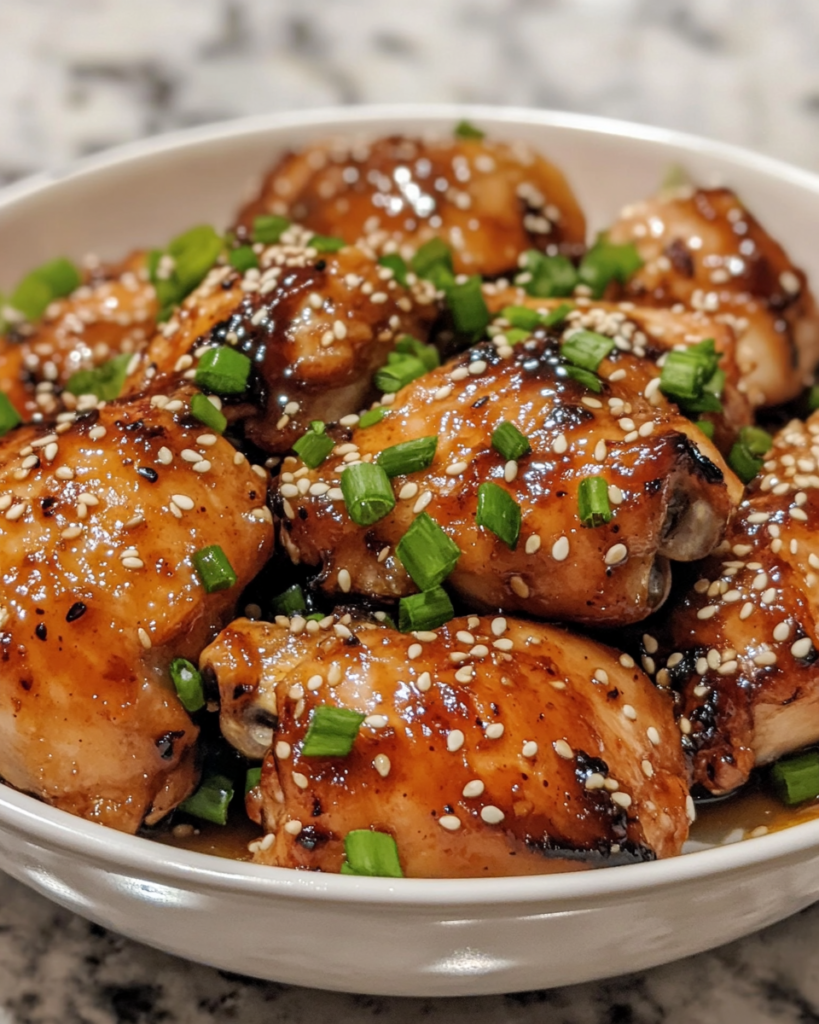
Sticky Garlic Soy Chicken Thighs bring together tender chicken, rich soy sauce, fresh garlic, and a glossy pan sauce that clings to every bite. The balance of savory, sweet, and slightly smoky flavors creates a comforting dinner that works well for both busy weeknights and relaxed family meals.
Chicken thighs stay juicy during cooking, making them a dependable choice for skillet recipes. As the sauce simmers, the garlic softens and blends into the soy mixture, creating layers of flavor without complicated preparation. A quick stovetop finish thickens the sauce into a rich coating that pairs beautifully with rice, noodles, or roasted vegetables.
This recipe uses pantry staples and straightforward cooking methods. With a hot skillet and a few simple ingredients, the chicken develops deep color while the sauce reduces into a sticky glaze that tastes rich without feeling heavy.
Ingredients Overview
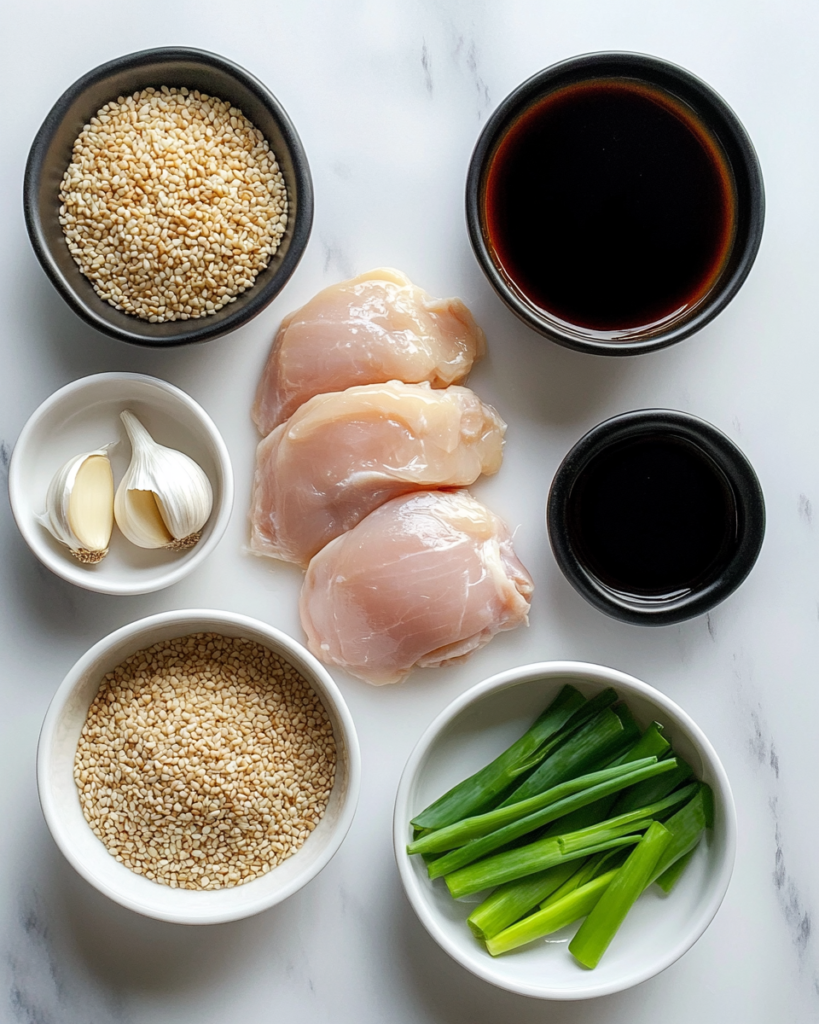
Boneless skinless chicken thighs are the foundation of this recipe. Thigh meat contains slightly more fat than chicken breast, which helps the meat stay moist while cooking over higher heat. The texture becomes tender and flavorful, especially after simmering in the garlic soy sauce.
Soy sauce creates the savory backbone of the glaze. Low-sodium soy sauce works particularly well because it allows the sauce to reduce without becoming overly salty. A small amount of brown sugar balances the saltiness and helps create the sticky finish that gives the dish its signature texture.
Fresh garlic brings warmth and depth to the sauce. Finely minced garlic melts into the glaze as it cooks, giving the dish its rich aroma. Fresh ginger adds brightness and a subtle peppery note that balances the sweetness.
Rice vinegar cuts through the richness and keeps the sauce balanced. Cornstarch thickens the glaze so it coats the chicken evenly rather than pooling at the bottom of the skillet.
Sesame oil contributes a nutty finish, while green onions add freshness at serving time. Red pepper flakes can be added for gentle heat, though the recipe remains flavorful without spice.
Boneless chicken breasts may replace thighs if preferred, though cooking time should be shortened slightly to avoid dryness. Honey can replace brown sugar for a softer sweetness, and tamari works well as a gluten-free substitute for soy sauce.
Ingredients
2 pounds boneless skinless chicken thighs
1 tablespoon olive oil
1 teaspoon salt
1/2 teaspoon black pepper
1/3 cup low-sodium soy sauce
3 tablespoons brown sugar
6 cloves garlic, minced
1 tablespoon fresh ginger, grated
2 tablespoons rice vinegar
1 tablespoon sesame oil
1 tablespoon cornstarch
2 tablespoons water
1/2 teaspoon red pepper flakes
2 green onions, sliced
1 teaspoon sesame seeds
Cooked white rice, for serving
Step-by-Step Instructions
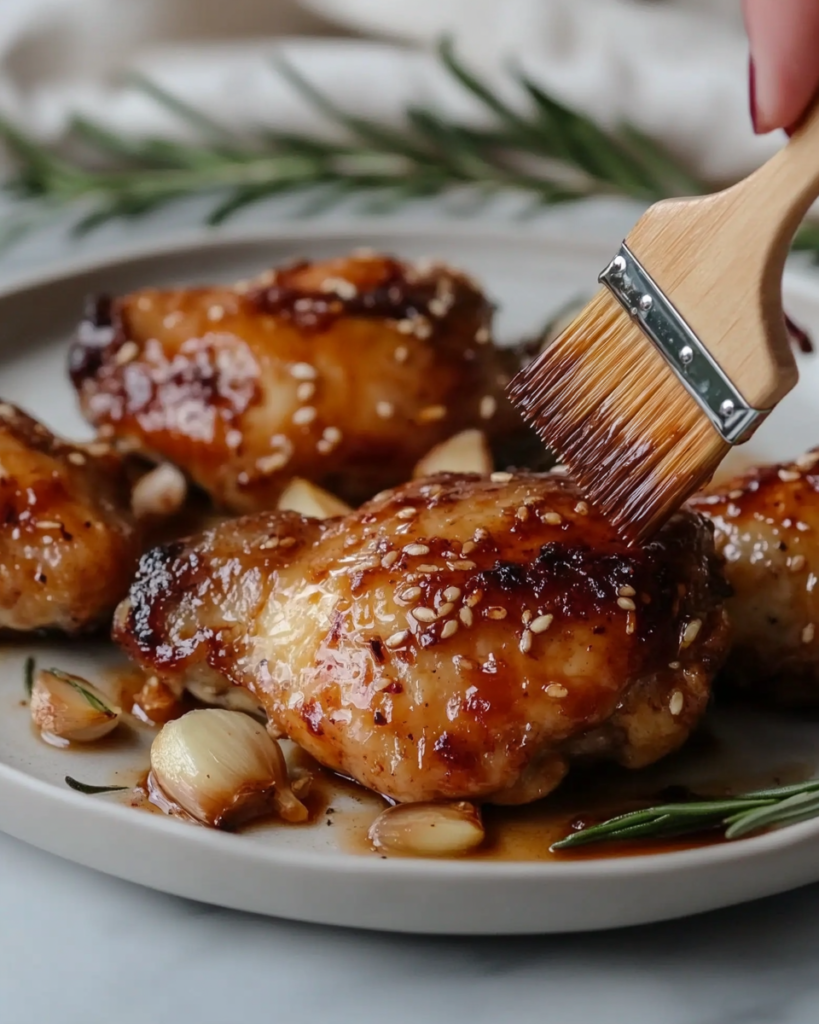
Pat the chicken thighs dry with paper towels before seasoning them with salt and black pepper. Dry chicken browns more evenly and develops richer flavor during searing. If excess moisture remains on the surface, the chicken may steam instead of forming a golden crust.
Heat a large skillet over medium-high heat. Add the olive oil and allow it to warm for about 30 seconds. Place the chicken thighs in a single layer without overcrowding the pan. Work in batches if necessary. Crowding traps steam and prevents browning.
Cook the chicken for about 5 to 6 minutes on the first side. The edges will turn golden and release naturally from the skillet when ready to flip. Turn the thighs and cook another 4 to 5 minutes until nearly cooked through. Transfer the chicken to a plate temporarily.
Lower the heat to medium. Add the minced garlic and grated ginger directly to the skillet. Stir constantly for about 30 seconds until fragrant. Garlic cooks quickly, so avoid leaving it unattended or it may turn bitter.
Pour in the soy sauce, brown sugar, rice vinegar, sesame oil, and red pepper flakes. Stir until the sugar dissolves and the mixture begins to simmer gently. Scrape the bottom of the skillet with a wooden spoon to release the browned bits left from the chicken. Those caramelized pieces bring extra flavor to the sauce.
In a small bowl, whisk together the cornstarch and water until smooth. Pour the slurry into the skillet while stirring continuously. Within a minute or two, the sauce will thicken into a glossy glaze.
Return the chicken thighs to the skillet. Spoon the sauce over the chicken repeatedly while it simmers for another 3 to 4 minutes. The glaze should coat the back of a spoon and cling lightly to the chicken.
Check the internal temperature with a thermometer. Chicken thighs should reach 175°F for tender texture. While 165°F is considered safe, slightly higher temperature softens the connective tissue and creates juicier meat.
Scatter sliced green onions and sesame seeds over the top before serving. Allow the chicken to rest for several minutes so the juices settle evenly through the meat.
If the sauce thickens too much, add a splash of water. If it seems thin, simmer for another minute while stirring gently.
Tips, Variations & Substitutions
Boneless skinless thighs cook quickly and stay moist, though bone-in thighs also work well. Bone-in pieces need additional cooking time, usually around 10 more minutes depending on size.
For deeper flavor, marinate the chicken in a few tablespoons of soy sauce and garlic for up to four hours before cooking. Overnight marinating is not necessary because soy sauce can begin pulling moisture from the meat.
A touch of honey creates a softer sweetness than brown sugar. Maple syrup also pairs nicely with the garlic and soy flavors while adding a mild earthy note.
Vegetables can be cooked directly in the same skillet. Broccoli, snap peas, sliced bell peppers, or mushrooms absorb the sauce beautifully and turn the dish into a complete meal.
For lighter texture, reduce the sugar slightly and serve the chicken with steamed vegetables and brown rice. Cauliflower rice also works well for a lower-carbohydrate option.
If fresh ginger is unavailable, ground ginger may be used in smaller quantity. Start with 1/4 teaspoon because dried ginger carries stronger concentration.
Cast iron skillets work particularly well for this recipe because they hold heat steadily and create deeper browning on the chicken surface.
Serving Ideas & Occasions
Sticky Garlic Soy Chicken Thighs fit naturally into weeknight dinners because the recipe cooks quickly while still tasting rich and layered. The glossy sauce pairs beautifully with fluffy jasmine rice, garlic noodles, or steamed rice bowls topped with vegetables.
Roasted broccoli, sesame green beans, or sautéed bok choy complement the savory glaze without overpowering the chicken. Crisp cucumber salad adds refreshing contrast to the warm sticky sauce.
For casual gatherings, slice the chicken and serve it over rice platters with extra green onions and sesame seeds. Small portions also work nicely in lettuce wraps or meal-prep containers for lunches throughout the week.
Cold sparkling water with lime balances the richness of the glaze, while iced green tea pairs naturally with the garlic and soy flavors.
The dish transitions easily between relaxed family dinners and simple entertaining because it looks polished while requiring minimal preparation.
Nutritional & Health Notes
Chicken thighs provide protein, iron, zinc, and B vitamins. Although thighs contain slightly more fat than chicken breast, much of the fat contributes to the moist texture and satisfying flavor.
Using low-sodium soy sauce helps control salt levels while still delivering savory depth. Serving the chicken alongside vegetables and rice creates a balanced meal with protein, carbohydrates, and fiber.
Fresh garlic and ginger contribute strong flavor without relying on large amounts of butter or cream. Sesame oil adds richness in small quantity, allowing the sauce to taste full without becoming overly heavy.
Brown sugar creates the sticky glaze, though the quantity remains moderate compared to many bottled sauces. Those looking for lower sugar content may reduce the amount slightly while still maintaining balanced flavor.
Cooking at home also allows control over ingredient quality and portion size, making this recipe a practical alternative to takeout meals.
FAQs
Can I bake the chicken instead of cooking it on the stove?
Yes, the chicken can be baked instead of pan-seared. Arrange the seasoned chicken thighs in a lightly greased baking dish and cook at 425°F for about 20 to 25 minutes, depending on thickness. While the chicken bakes, prepare the garlic soy sauce separately on the stove. Once the chicken reaches safe internal temperature, transfer it into the sauce and coat thoroughly. Broiling the chicken for the final 2 minutes creates darker edges and helps the glaze cling more evenly. Baking works especially well when preparing larger batches because the chicken cooks evenly without crowding a skillet.
Can I prepare Sticky Garlic Soy Chicken Thighs ahead of time?
This recipe reheats very well, making it suitable for meal preparation. Allow the chicken to cool fully before storing it in an airtight container with extra sauce. Refrigerated leftovers keep well for up to four days. During reheating, add a splash of water to loosen the glaze because it thickens as it cools. Warm the chicken gently in a skillet over medium-low heat or microwave in short intervals. The flavors often deepen overnight as the garlic and soy sauce continue blending together. Rice and vegetables can also be stored separately for convenient lunches.
What side dishes pair nicely with this recipe?
Steamed jasmine rice remains one of the most popular pairings because it absorbs the sticky sauce beautifully. Brown rice brings slightly nuttier flavor and more fiber. Roasted vegetables such as broccoli, carrots, or Brussels sprouts balance the savory glaze with natural sweetness and texture. Stir-fried green beans and sautéed bok choy also work particularly well. For lighter meals, cucumber salad or shredded cabbage slaw adds crisp freshness. Noodles tossed with sesame oil create another satisfying option that complements the garlic soy flavors without competing with the chicken.
How do I keep the sauce from burning?
The sauce contains sugar, which means high heat can cause scorching if left unattended. After browning the chicken, lower the heat slightly before adding the garlic and sauce ingredients. Stir frequently once the sauce begins simmering. Cornstarch thickens the mixture quickly, so the glaze only needs a few minutes to develop. If the skillet becomes too hot, remove it briefly from the burner while stirring. Using medium heat instead of aggressive high heat gives the sauce time to reduce gradually while keeping the garlic fragrant rather than bitter.
Can I freeze the cooked chicken?
Yes, the cooked chicken freezes well. Allow the chicken and sauce to cool completely before placing them into freezer-safe containers or resealable freezer bags. Frozen portions maintain good texture for around two months. Thaw overnight in the refrigerator before reheating gently on the stove. Adding a spoonful of water during reheating helps restore the glossy consistency of the sauce. Rice can also be frozen separately for easier meal preparation. Fresh green onions and sesame seeds should be added after reheating rather than before freezing.
Why are chicken thighs preferred for this recipe?
Chicken thighs contain more connective tissue and natural fat than chicken breast, helping them stay juicy during high-heat cooking. The rich garlic soy glaze also pairs particularly well with the deeper flavor of dark meat. Even if cooked a minute or two longer than planned, thighs remain tender rather than drying out quickly. Their texture works especially well in skillet recipes where the sauce reduces around the meat. Chicken breast may still be used successfully, though it benefits from shorter cooking time and close attention to prevent toughness.
Can I make this recipe gluten-free?
Yes, the recipe adapts easily for gluten-free cooking. Replace standard soy sauce with gluten-free tamari or coconut aminos. Double-check labels on cornstarch and sesame oil if cooking for someone with significant gluten sensitivity. The remaining ingredients are naturally gluten-free in most cases. Serve the chicken with rice or gluten-free noodles for a complete meal. Coconut aminos create slightly sweeter flavor than soy sauce, so the brown sugar can be reduced slightly if desired. The cooking method remains exactly the same regardless of which sauce substitute is chosen.