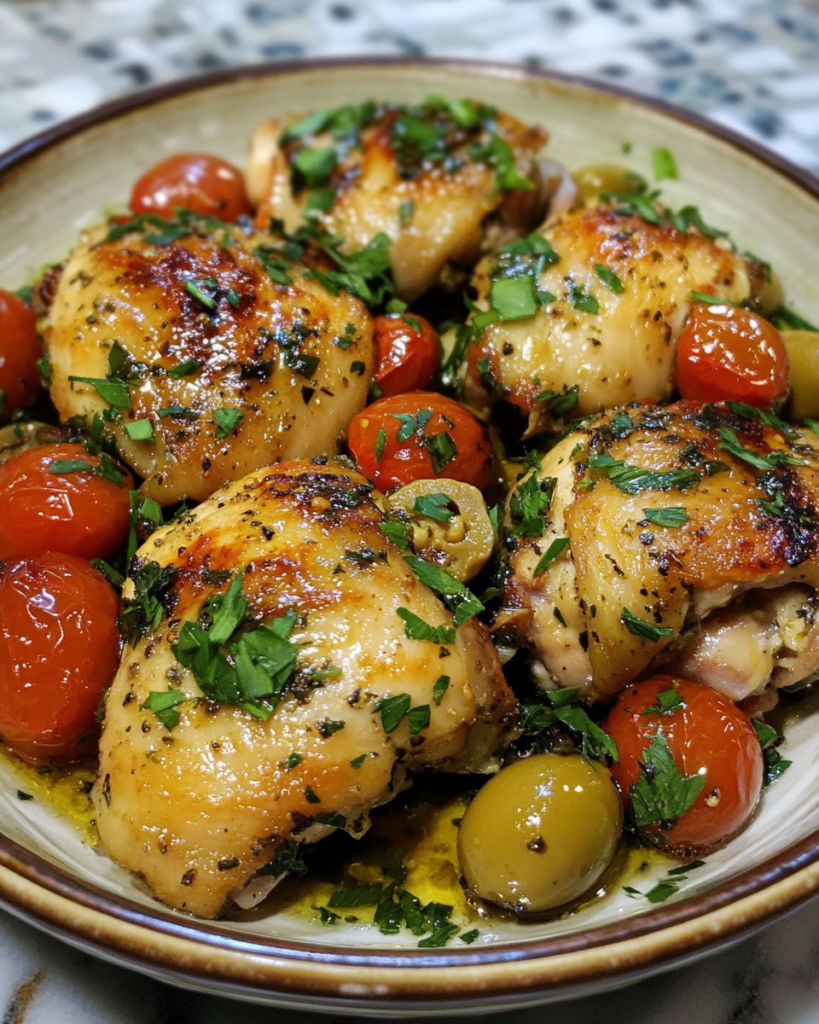
Mediterranean Chicken Thighs bring together olive oil, garlic, herbs, citrus, and tender chicken for a deeply satisfying dinner with bright coastal character. Juicy chicken thighs absorb every layer of seasoning during roasting, creating rich flavor inside and crisp golden skin outside. This dish suits busy weeknights, relaxed family suppers, and casual gatherings around a crowded table.
Classic Mediterranean pantry staples give this recipe its rustic personality. Fresh lemon adds brightness, oregano and thyme bring earthy aroma, while olives and tomatoes balance the savory richness of the chicken. A single baking dish keeps preparation simple and cleanup light, which adds extra appeal for home cooks searching for hearty comfort without extra fuss.
The chicken turns succulent during roasting because thighs naturally contain slightly higher fat content than chicken breast. That added richness keeps the meat tender even after extended cooking. Combined with garlic, onion, and olive oil, the final dish carries bold flavor without feeling heavy.
Ingredients Overview
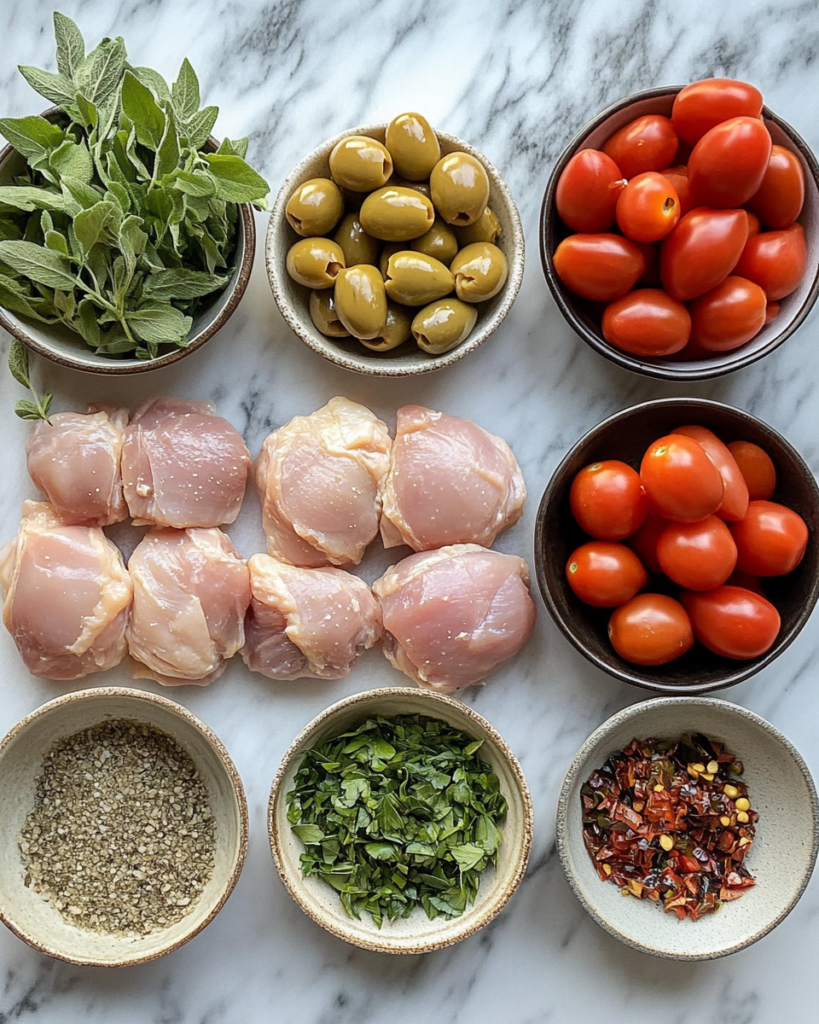
Chicken thighs form the foundation of this dish because they stay juicy during roasting and absorb seasoning beautifully. Bone-in, skin-on thighs work particularly well since the skin crisps nicely in the oven while the bones contribute deeper savory character throughout cooking. Boneless thighs also work if shorter cooking time fits your schedule.
Olive oil plays a central role in Mediterranean cooking and gives this recipe silky texture along with gentle fruitiness. Fresh lemon juice cuts through the richness of the chicken while adding brightness that balances roasted ingredients. Garlic contributes depth and warmth without overpowering the other flavors.
Cherry tomatoes soften during roasting and release natural sweetness into the pan juices. Red onion becomes mellow and slightly caramelized in the oven, adding subtle sweetness and texture. Kalamata olives provide salty contrast that pairs beautifully with citrus and herbs.
Dried oregano and thyme deliver classic Mediterranean aroma. Paprika adds mild warmth and richer color across the chicken skin. Fresh parsley scattered over the finished dish gives freshness and contrast.
Several ingredient swaps work nicely here. Shallots may replace red onion for milder flavor. Green olives can stand in for Kalamata olives if preferred. Fresh rosemary or basil may join the herb mixture for extra fragrance. Chicken drumsticks work well too, though cooking duration may shift slightly depending on size.
A small splash of chicken broth during roasting keeps the pan moist and creates flavorful juices perfect for spooning over rice, potatoes, or warm bread.
Ingredients
6 bone-in, skin-on chicken thighs
2 tablespoons olive oil
1 lemon, juiced
4 garlic cloves, minced
1 teaspoon dried oregano
1 teaspoon dried thyme
1 teaspoon paprika
1 teaspoon kosher salt
1/2 teaspoon black pepper
1 small red onion, sliced
1 cup cherry tomatoes
1/2 cup Kalamata olives
1/3 cup chicken broth
2 tablespoons chopped fresh parsley
Lemon wedges for serving
Step-by-Step Instructions
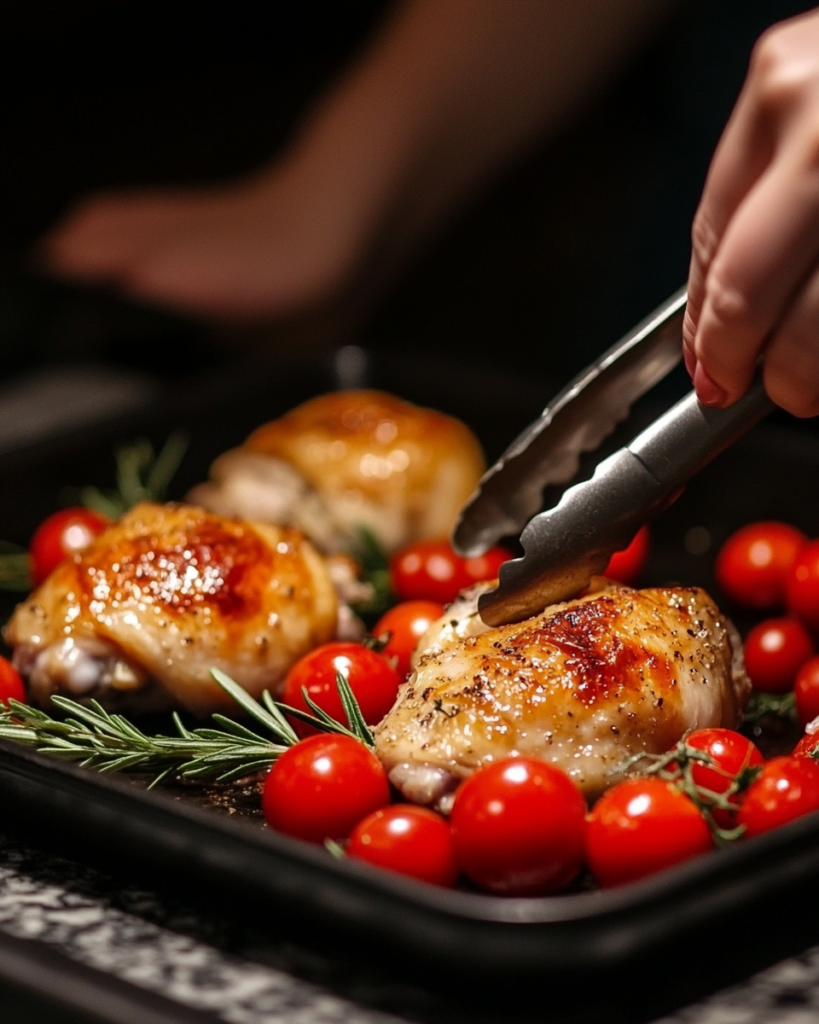
Pat the chicken thighs dry using paper towels before seasoning. Dry skin roasts far better than damp skin and develops richer color during cooking. Place the chicken inside a large mixing bowl or shallow dish.
Combine olive oil, lemon juice, minced garlic, oregano, thyme, paprika, salt, and black pepper inside a small bowl. Stir thoroughly until blended. Pour the mixture over the chicken thighs and coat every surface evenly. Allow the chicken to rest for at least 30 minutes if time allows. A short resting period helps the seasoning penetrate deeper into the meat.
Preheat the oven to 400 degrees Fahrenheit. Arrange sliced red onion, cherry tomatoes, and olives inside a large baking dish. Pour the chicken broth into the bottom of the dish. Place the seasoned chicken thighs skin-side upward over the vegetables.
Roast uncovered for about 40 to 45 minutes. During roasting, the tomatoes soften and release juices while the onions turn tender and lightly browned around the edges. The chicken skin should appear crisp and deeply golden once finished.
Check the thickest portion of the thighs with a meat thermometer. Internal temperature should reach 175 degrees Fahrenheit for tender dark meat. Avoid removing the chicken too early since thighs benefit from slightly longer cooking compared with breast meat.
If extra browning is desired, place the baking dish beneath the broiler for two to three minutes near the end of cooking. Watch carefully because the skin can darken quickly beneath direct heat.
Allow the chicken to rest for five minutes before serving. Resting helps the juices settle inside the meat rather than spilling across the plate immediately after cutting.
Scatter chopped parsley across the finished dish and serve alongside the roasted vegetables and flavorful pan juices. Warm rice, couscous, or roasted potatoes pair beautifully with the savory broth created during roasting.
One frequent issue involves overcrowding the baking dish. Leave small gaps between each thigh so hot air circulates properly around the chicken. Crowding traps steam and softens the skin instead of helping it crisp.
Another common mistake comes from skipping the drying step before seasoning. Moisture prevents proper browning and can leave the skin rubbery rather than crisp. Taking a moment to dry the chicken thoroughly produces much richer texture.
Tips, Variations & Substitutions
Boneless chicken thighs shorten cooking duration slightly and work nicely for meal preparation since they slice easily for salads, grain bowls, or wraps. Reduce oven time by several minutes and monitor internal temperature closely.
Fresh herbs create brighter aroma during spring and summer months. Chopped rosemary, basil, or dill all pair beautifully with lemon and olives. Add delicate herbs near the end of cooking so their fragrance stays vivid.
For deeper roasted flavor, marinate the chicken overnight inside the refrigerator. Longer marinating gives the garlic, herbs, and citrus more opportunity to season the meat thoroughly.
Several vegetable additions fit naturally into this dish. Zucchini, bell peppers, artichoke hearts, or chickpeas roast beautifully alongside the chicken and absorb the savory juices.
A dairy-free meal already comes naturally with this recipe, though gluten-free diners should pair the chicken with rice or potatoes rather than bread or pasta containing wheat.
For slightly smokier character, smoked paprika works beautifully in place of standard paprika. Red pepper flakes can add gentle heat for diners who enjoy spicier dishes.
If chicken thighs with skin are unavailable, skinless thighs still remain tender and flavorful. Boneless chicken breast may also work, though cooking duration drops considerably because breast meat dries faster than dark meat.
Leftovers store nicely inside an airtight container for several days. Reheat gently with a spoonful of broth to keep the chicken moist during warming.
Serving Ideas & Occasions
Mediterranean Chicken Thighs pair wonderfully with fluffy couscous, herbed rice, roasted baby potatoes, or warm flatbread. The flavorful juices from the pan soak beautifully into grains and bread, adding rich savory depth across the entire plate.
A crisp cucumber salad with feta and lemon vinaigrette balances the hearty chicken beautifully. Roasted green beans or charred asparagus also complement the citrus and herb flavors nicely.
This dish suits many occasions because preparation stays simple while presentation still feels inviting. It works beautifully for Sunday suppers, casual dinner gatherings, or relaxed outdoor meals during warm weather. Since everything roasts together inside one dish, hosting becomes far easier with less stovetop attention required.
For beverages, chilled sparkling water with lemon, iced tea, or dry white wine all pair nicely with the bright citrus and herb flavors. The savory olives and roasted tomatoes also fit naturally alongside Mediterranean appetizers such as hummus, marinated vegetables, or simple grain salads.
Nutritional & Health Notes
Chicken thighs provide protein along with iron, zinc, and several B vitamins. Dark meat contains slightly higher fat content than chicken breast, though much of that richness contributes tenderness and satisfying texture during roasting.
Olive oil contributes heart-friendly unsaturated fats while herbs and garlic add flavor without relying heavily on butter or heavy cream. Tomatoes contribute vitamin C and antioxidants, while onions provide mild sweetness and fiber.
Because olives and broth already carry sodium, additional salt should remain moderate during seasoning. Fresh lemon brightens the dish naturally, helping every ingredient taste lively without excessive salt or rich sauces.
Pairing the chicken with vegetables and grains creates a balanced meal with protein, fiber, and carbohydrates. Roasted vegetables cooked directly beneath the chicken absorb flavorful juices and reduce food waste since every ingredient inside the dish becomes part of the finished meal.
Portion size can shift depending on accompanying side dishes. One chicken thigh paired with vegetables and grains often creates a satisfying serving for lighter meals, while larger appetites may prefer two thighs.
FAQs
Can I prepare Mediterranean Chicken Thighs ahead of time?
Yes, this recipe works very well for advance preparation. The chicken may rest inside the marinade overnight inside the refrigerator, which gives the herbs, garlic, and lemon additional time to season the meat thoroughly. Vegetables may also be sliced earlier in the day and stored separately until cooking time arrives.
When ready to cook, simply arrange everything inside the baking dish and roast according to the instructions. Leftover cooked chicken reheats nicely for lunches or quick dinners throughout the week. Store leftovers inside airtight containers and warm gently inside the oven or microwave with a spoonful of broth to maintain moisture and tenderness.
Which olives work nicely in this recipe?
Kalamata olives remain a classic choice because their rich briny flavor pairs beautifully with lemon, garlic, and roasted chicken. Their deep savory taste gives the dish distinct Mediterranean personality without overpowering the other ingredients.
Green olives also work nicely for diners who enjoy slightly milder saltiness. Castelvetrano olives contribute buttery texture and softer flavor, while black olives bring gentler character suitable for children or diners sensitive to stronger olive flavor. Pitted olives simplify serving and eating, especially during family meals. Whichever variety you choose, adding the olives during roasting allows their flavor to blend naturally into the pan juices and vegetables.
Why are chicken thighs preferred over chicken breast?
Chicken thighs remain naturally juicy because dark meat contains slightly higher fat content than chicken breast. During roasting, that richness protects the meat from drying and creates tender texture even after extended cooking.
Chicken breast cooks faster and can become dry if left inside the oven too long. Thighs also absorb marinades exceptionally well and develop crisp flavorful skin during roasting. Their richer savory character pairs beautifully with Mediterranean ingredients such as olives, tomatoes, garlic, and herbs. While breast meat may still work in this recipe, thighs generally provide deeper flavor and more forgiving cooking results for home cooks.
Can this recipe cook inside a skillet instead of the oven?
Yes, though the texture shifts slightly compared with oven roasting. Begin by searing the chicken thighs skin-side downward inside a large oven-safe skillet until golden and crisp. Remove briefly while sautéing onions and garlic.
Return the chicken to the skillet alongside tomatoes, olives, broth, and seasonings. The skillet may then transfer directly into the oven until the chicken finishes cooking. This approach develops excellent browning while still allowing the vegetables to soften in the flavorful juices. A heavy cast-iron skillet works particularly well because it retains heat beautifully and creates rich color across the chicken skin.
What side dishes pair nicely with Mediterranean Chicken Thighs?
Warm couscous, rice pilaf, roasted potatoes, and crusty bread all pair beautifully with the savory juices from the roasting pan. Grain salads with cucumber, parsley, and lemon also complement the citrus and herb flavors naturally.
Vegetable sides such as roasted zucchini, asparagus, green beans, or eggplant round out the meal nicely without overwhelming the chicken. For lighter meals, a crisp salad with tomatoes and feta creates refreshing contrast beside the warm roasted ingredients. Since the chicken already carries bold seasoning, simpler side dishes usually create the most balanced plate overall.
How should leftovers be stored and reheated?
Allow the chicken to cool fully before storing inside airtight containers. Refrigerated leftovers generally remain fresh for up to four days. Keeping some of the pan juices with the chicken helps preserve moisture during storage.
For reheating, place the chicken inside a covered baking dish with a spoonful of broth or leftover juices and warm inside a moderate oven until heated through. Microwaving also works for quicker meals, though gentler reheating helps preserve texture more successfully. Leftover chicken slices nicely for grain bowls, wraps, salads, or pasta dishes throughout the week.
Can frozen chicken thighs work for this recipe?
Frozen chicken thighs may absolutely work once fully thawed before seasoning and roasting. Proper thawing allows the marinade to coat the meat evenly and helps the chicken cook more consistently throughout.
The safest thawing method involves resting the chicken inside the refrigerator overnight. After thawing, pat the thighs dry thoroughly before seasoning because extra surface moisture can prevent crisp browning during roasting. Avoid marinating partially frozen chicken since the seasonings will not distribute evenly across the meat. Once thawed and dried, the recipe proceeds exactly the same as with fresh chicken thighs.
………………..