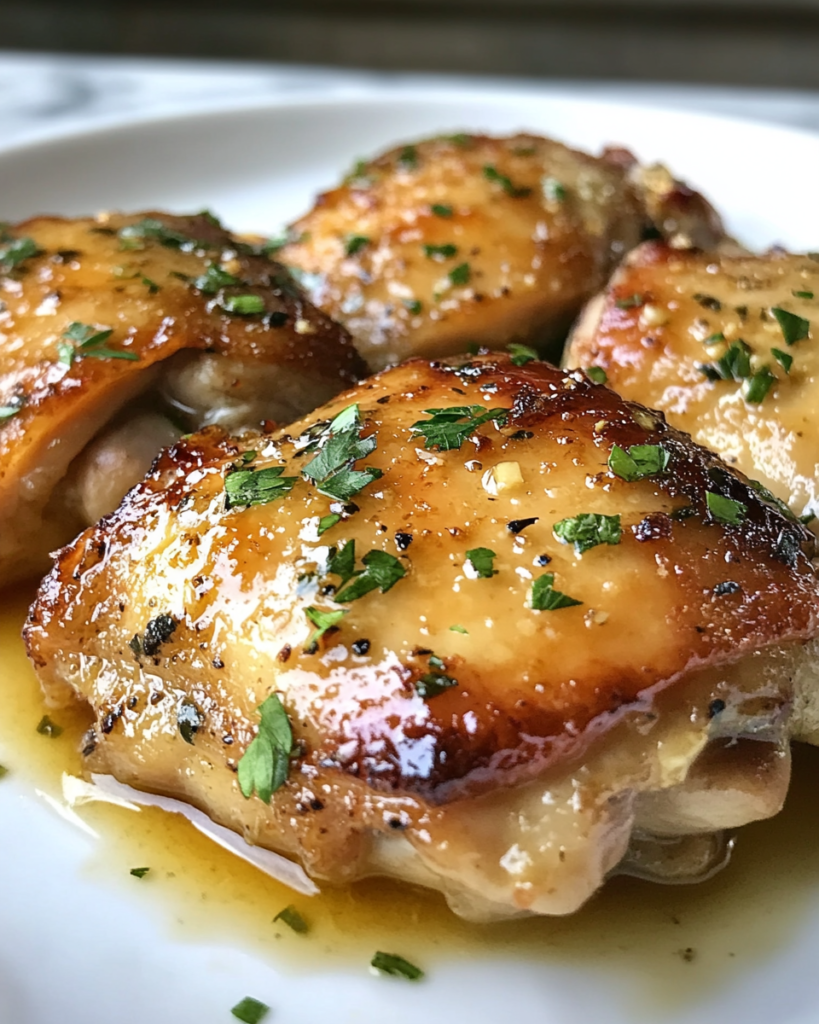
Honey Garlic Chicken Thigh Bake brings together tender chicken, a sticky glaze, and rich roasted flavor in one pan. The sweet honey balances the savory garlic and soy sauce, while oven roasting gives the chicken a deep golden finish with crisp edges and juicy meat.
This dish fits busy weeknights, family dinners, and relaxed weekend meals. Chicken thighs stay moist during baking, making them forgiving even for beginner home cooks. The sauce thickens naturally in the oven and coats every bite with glossy flavor.
Another reason many home cooks return to Honey Garlic Chicken Thigh Bake again and again is the flexibility. It pairs well with rice, roasted vegetables, noodles, mashed potatoes, or fresh salad greens. The leftovers also reheat nicely, making lunch the next day just as satisfying.
The aroma from garlic and honey bubbling in the oven fills the kitchen with warm savory notes. A handful of pantry staples turns into a deeply satisfying dinner without complicated steps or expensive ingredients.
Ingredients Overview

Chicken thighs are the foundation of this dish because they remain juicy during baking. Bone-in thighs deliver richer flavor, though boneless thighs also work well when a shorter cooking time is preferred. The natural fat from the thighs melts into the sauce during roasting, giving the glaze a silky texture.
Honey creates sweetness and helps the surface caramelize in the oven. As the sauce cooks, the sugars darken slightly and create a sticky coating around the chicken. Garlic adds sharp savory depth that balances the sweetness from the honey. Fresh garlic gives the strongest flavor, though garlic paste can work in a pinch.
Soy sauce adds saltiness and deep umami flavor. Low-sodium soy sauce works particularly well because it allows the honey and garlic to stay balanced without becoming overly salty. A splash of rice vinegar or apple cider vinegar cuts through the richness and brightens the sauce.
Olive oil helps the chicken brown while keeping the surface from drying during baking. Black pepper and smoked paprika add warmth and mild spice. Cornstarch can be mixed into the sauce if a thicker glaze is preferred during the final minutes of cooking.
Fresh parsley or green onions bring freshness at serving time. Sesame seeds add a gentle crunch and a subtle nutty finish. Together, these ingredients create layers of sweet, savory, garlicky flavor that cling beautifully to the roasted chicken.
Ingredients
8 bone-in chicken thighs
1/3 cup honey
6 cloves garlic, minced
1/4 cup low-sodium soy sauce
2 tablespoons olive oil
1 tablespoon rice vinegar
1 teaspoon smoked paprika
1/2 teaspoon black pepper
1/2 teaspoon salt
1 teaspoon cornstarch
1 tablespoon water
1 tablespoon chopped parsley
1 teaspoon sesame seeds
Step-by-Step Instructions

Preheat the oven to 400 degrees Fahrenheit. Lightly grease a large baking dish or sheet pan with olive oil. Pat the chicken thighs dry with paper towels before seasoning. Dry skin browns far better in the oven and helps the glaze cling properly during roasting.
Season both sides of the chicken with salt, black pepper, and smoked paprika. Arrange the thighs skin-side up in the prepared baking dish with a little space between each piece. Crowding the pan traps steam and prevents caramelization.
In a medium bowl, whisk together honey, minced garlic, soy sauce, olive oil, and rice vinegar. Stir until smooth and fully combined. Pour roughly two-thirds of the sauce over the chicken, saving the remaining portion for later brushing.
Bake uncovered for 30 minutes. During this stage, the chicken begins releasing juices into the sauce while the skin slowly browns. Halfway through cooking, spoon some pan sauce over the tops of the thighs to keep the glaze glossy and flavorful.
While the chicken cooks, combine cornstarch and water in a small bowl to form a slurry. Mix the slurry into the reserved sauce. This step helps create a thicker glaze during the final roasting stage.
After the first 30 minutes, remove the pan from the oven and brush the thickened sauce over the chicken. Return the pan to the oven for another 12 to 15 minutes. The glaze should appear sticky and richly browned, while the internal temperature of the chicken reaches 165 degrees Fahrenheit.
For deeper caramelization, place the pan under the broiler for 2 to 3 minutes. Watch closely during this step because honey can darken quickly. The surface should become glossy with lightly charred edges rather than burnt.
Allow the chicken to rest for 5 minutes before serving. Resting keeps the juices inside the meat instead of spilling onto the plate. Spoon extra pan sauce over the chicken and finish with parsley and sesame seeds.
One frequent mistake is adding too much salt before baking. Since soy sauce already carries saltiness, heavy seasoning can overpower the balance. Another common issue is baking at a lower temperature, which can leave the skin pale and soft rather than crisp and caramelized.
Tips, Variations & Substitutions
Boneless chicken thighs cook faster than bone-in pieces and usually finish in about 25 to 30 minutes. Chicken breasts can also work, though they tend to dry faster and benefit from careful timing.
For a deeper savory note, add a teaspoon of grated ginger to the sauce. A small amount of chili flakes brings gentle heat that balances the sweetness from the honey. Fresh lemon juice added at serving time brightens the entire dish.
Maple syrup may replace honey for a slightly earthier flavor. Coconut aminos can stand in for soy sauce when a lower-sodium option is preferred. Tamari also works nicely for gluten-conscious cooking.
Roasted broccoli, carrots, onions, or bell peppers can cook in the same pan beside the chicken. The vegetables soak up the sweet garlic sauce and become richly caramelized during roasting.
If a thicker glaze is preferred, simmer the leftover pan juices in a small saucepan for several minutes after baking. Stir occasionally until the sauce coats the back of a spoon.
Meal prep cooks often prepare the marinade earlier in the day and refrigerate the chicken for several hours before baking. This gives the garlic and soy sauce more time to flavor the meat deeply.
Fresh herbs added after baking bring balance to the rich glaze. Parsley, cilantro, or sliced green onions all work beautifully.
Serving Ideas & Occasions
Honey Garlic Chicken Thigh Bake pairs beautifully with fluffy jasmine rice because the grains absorb the sticky sauce. Buttered noodles, creamy mashed potatoes, or roasted sweet potatoes also complement the savory glaze very well.
For lighter meals, serve the chicken beside crisp cucumber salad, steamed green beans, or roasted asparagus. The contrast between fresh vegetables and the rich sauce keeps the plate balanced and satisfying.
This dish fits many occasions, from quiet family dinners to casual gatherings with friends. Since most of the cooking happens in the oven, it allows the cook to prepare side dishes or set the table without standing over the stove.
Warm dinner rolls or crusty bread work nicely for soaking up extra sauce from the pan. Iced tea, sparkling water with citrus, or light white wine all pair naturally with the sweet garlic flavor profile.
Leftovers can be sliced and added to grain bowls, wraps, or salads for lunch the following day.
Nutritional & Health Notes
Chicken thighs provide protein, iron, zinc, and several B vitamins. Although thighs contain more fat than chicken breast, much of the flavor and tenderness comes from that natural richness. Pairing the chicken with vegetables and whole grains creates a balanced meal.
Honey contributes sweetness while also helping the glaze caramelize during roasting. Since the sauce already contains sugar from the honey, serving the dish with lighter side dishes helps balance the meal comfortably.
Garlic adds strong savory flavor without relying heavily on butter or cream. Soy sauce contributes sodium, so low-sodium versions are often a smart choice for home cooks watching salt intake.
Baking rather than deep frying keeps the dish lighter while still producing crisp edges and rich flavor. Roasted vegetables served alongside the chicken add fiber and color to the plate.
Portion size also matters. One or two thighs with vegetables and rice usually creates a filling and balanced dinner without feeling overly heavy.
FAQs
Can I prepare Honey Garlic Chicken Thigh Bake ahead of time?
Yes, this recipe works very well for advance preparation. The chicken can sit in the honey garlic marinade for several hours in the refrigerator before baking. Marinating earlier in the day allows the garlic and soy sauce to soak into the meat more deeply, giving the finished dish richer flavor. When ready to cook, place the chicken directly into the baking dish and continue with the roasting steps. If the chicken has been refrigerated for a long period, allow it to sit at room temperature for about 20 minutes before baking. This helps the meat cook more evenly. The sauce can also be mixed a day ahead and stored separately until dinner time.
Can I freeze leftover chicken?
Cooked Honey Garlic Chicken Thigh Bake freezes nicely when stored properly. Allow the chicken to cool fully before placing it into airtight containers or freezer bags. Spoon some extra sauce over the chicken before freezing because this helps keep the meat moist during reheating. Frozen portions usually keep good flavor and texture for about three months. For reheating, thaw the chicken overnight in the refrigerator and warm it in the oven at 350 degrees Fahrenheit until heated through. Microwaving also works, though the skin may soften slightly. Adding a spoonful of water or sauce during reheating helps prevent dryness and keeps the glaze glossy.
Why are chicken thighs better than chicken breasts for this recipe?
Chicken thighs contain more natural fat than chicken breasts, which helps them stay juicy during roasting. Since the honey glaze cooks at a fairly high temperature, lean chicken breast meat can dry faster if overcooked even slightly. Thighs are much more forgiving and maintain tenderness during baking. Bone-in thighs also contribute deeper savory flavor because the bones help retain moisture while cooking. Another advantage is the way the rendered fat mixes with the honey garlic sauce in the pan, creating a richer glaze. While chicken breasts still work in this recipe, thighs usually deliver the most flavorful and tender result with less risk of dryness.
How do I keep the glaze from burning?
Honey naturally darkens quickly in high heat because of its sugar content. The key is balancing caramelization without letting the sauce scorch. Baking at 400 degrees Fahrenheit usually works well because it browns the chicken while still allowing the sauce to thicken gradually. Brushing part of the glaze on later in the cooking process also helps prevent burning. If broiling at the end, watch the chicken closely and keep the broiler step very short. Using a baking dish rather than a thin sheet pan can also reduce scorching because the sauce pools slightly around the chicken instead of spreading too thinly across metal surfaces.
What vegetables cook well with this dish?
Many vegetables roast beautifully beside Honey Garlic Chicken Thigh Bake. Broccoli, carrots, Brussels sprouts, onions, and bell peppers all absorb the sweet garlic sauce very nicely. Firmer vegetables like carrots should be cut smaller so they finish cooking at the same pace as the chicken. Softer vegetables such as zucchini may be added later in the baking process to prevent overcooking. Tossing vegetables lightly with olive oil before roasting helps them caramelize properly in the oven. Since the chicken releases flavorful juices while baking, vegetables cooked in the same pan often become deeply savory and richly browned with very little extra effort.
Can I make this recipe less sweet?
Yes, the sweetness can easily be adjusted while keeping the sauce balanced. Reducing the honey slightly creates a more savory flavor profile. Some cooks replace part of the honey with chicken broth or a little extra soy sauce for a less sugary glaze. Adding rice vinegar or lemon juice also cuts through sweetness and brightens the flavor. Garlic and ginger naturally balance sweet ingredients as well, so increasing either one slightly can shift the sauce toward a more savory direction. Keeping the sauce balanced matters because too little honey may reduce the glossy caramelized finish that gives this dish much of its appealing texture and appearance.
What is the safest way to tell when the chicken is finished cooking?
The safest method is checking the internal temperature with a meat thermometer. Chicken should reach 165 degrees Fahrenheit in the thickest section near the bone. The juices should appear clear rather than pink, and the meat should pull away from the bone easily when pierced with a fork. The outside of the chicken will usually appear richly browned with bubbling glaze around the edges of the pan. Cooking time may vary slightly depending on the size of the thighs and whether they are bone-in or boneless. Allowing the chicken to rest for several minutes after baking also helps the juices settle back into the meat before serving.