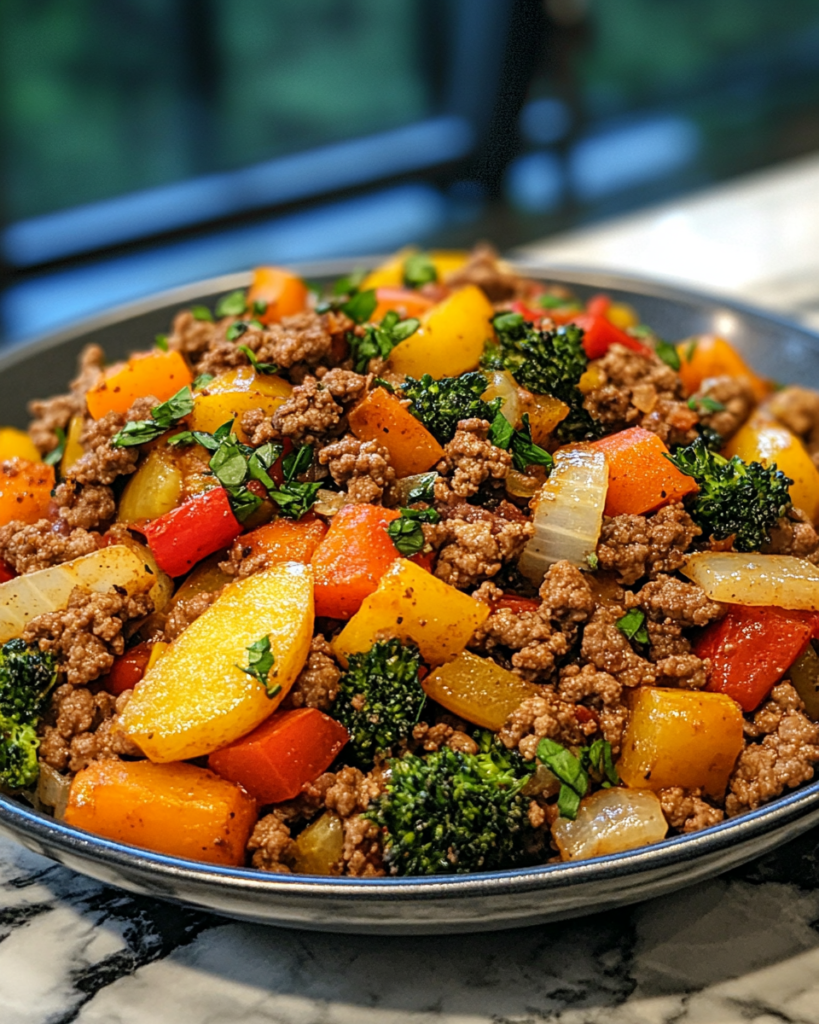
This Healthy Ground Beef Skillet (One Pan Dinner)5 QuickCozy Meal brings together tender ground beef, colorful vegetables, and warm seasoning in a single pan for a filling evening dish. It focuses on balanced flavor, steady cooking, and practical preparation that fits a busy kitchen routine.
Each portion offers a mix of protein, fiber-rich vegetables, and savory notes from herbs and spices. The skillet approach keeps cleanup minimal while maintaining rich taste development through layered cooking steps.
The result is a steady, hearty dinner option that works across different serving styles, from bowls to lettuce wraps or paired with grains.
Ingredients Overview
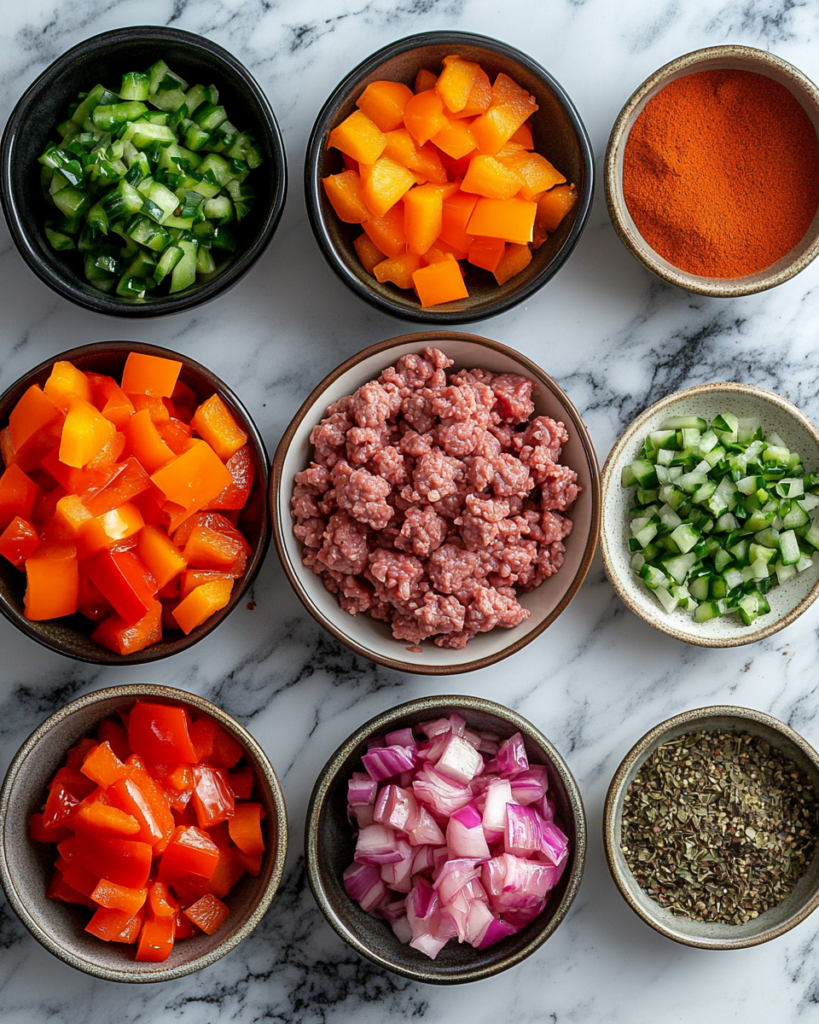
Ground beef serves as the core protein in this skillet dish, providing a savory base and rich texture. Choosing lean beef helps reduce excess fat while still keeping a satisfying mouthfeel after cooking.
Aromatics such as onion and garlic build the foundation of flavor. When gently heated in the pan, they release natural sweetness and deepen the overall taste profile of the dish.
Bell peppers contribute color, mild crunch, and a subtle sweetness that balances the savory beef. They also hold their shape during cooking, adding texture contrast.
Zucchini brings softness and absorbs surrounding seasoning, helping the skillet feel balanced without overpowering the dish. It also adds moisture, which blends with the beef juices.
Tomatoes, whether diced fresh or canned, create a light sauce that ties all components together. Their acidity brightens the flavor and prevents heaviness.
Seasonings such as paprika, oregano, salt, and black pepper round out the dish. Paprika adds warmth, oregano introduces earthy notes, and pepper gives gentle heat.
A small amount of olive oil assists in browning the beef and softening the vegetables. Optional toppings such as shredded cheese or chopped herbs can be added for extra depth.
The ingredients work together through gradual layering in the pan, where each addition builds complexity without requiring multiple cookware pieces.
Ingredients
1 pound lean ground beef
1 tablespoon olive oil
1 medium onion, diced
3 garlic cloves, minced
1 red bell pepper, chopped
1 yellow bell pepper, chopped
1 medium zucchini, sliced into half-moons
1 cup diced tomatoes
2 tablespoons tomato paste
1 teaspoon paprika
1 teaspoon dried oregano
1/2 teaspoon salt
1/4 teaspoon black pepper
1/2 teaspoon chili flakes (optional)
1/4 cup beef broth
2 tablespoons chopped parsley (optional garnish)
Step-by-Step Instructions
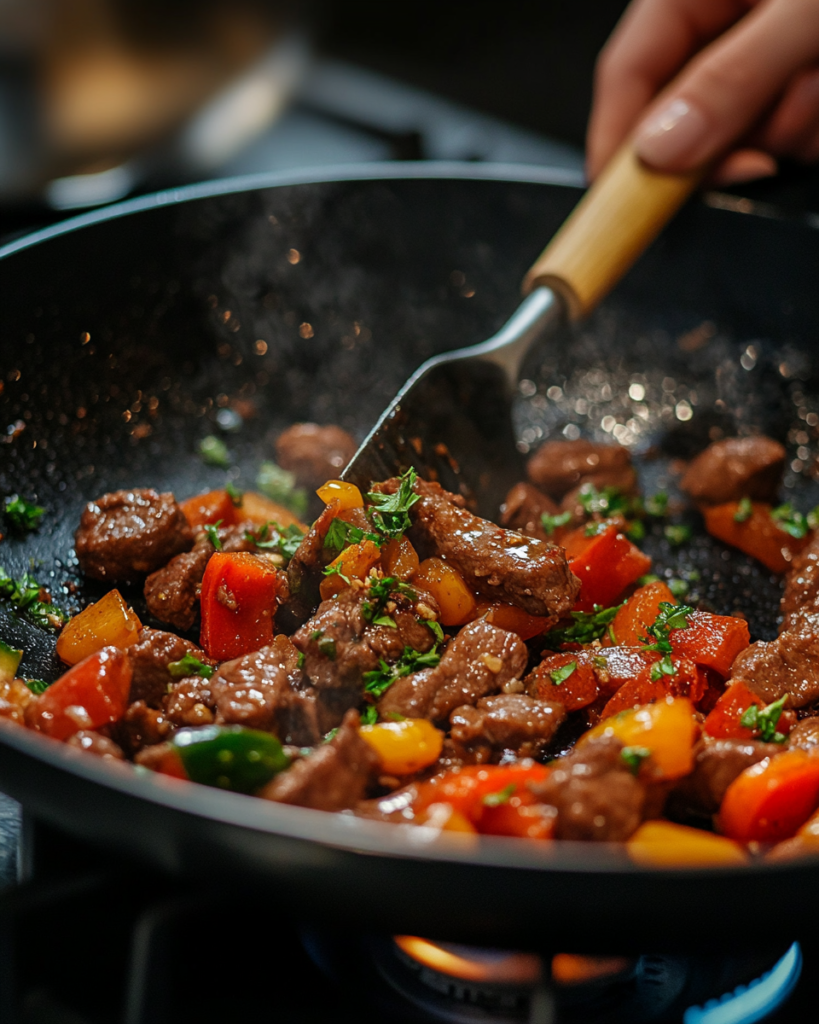
Place a large skillet on medium heat and add olive oil. Allow the oil to warm until it spreads easily across the pan surface. Add diced onion and stir gently as it begins to soften. The onion should turn slightly translucent after a few minutes of steady heating.
Add minced garlic to the skillet and stir continuously for a short period. Garlic releases aroma quickly, so keeping it in motion prevents browning too rapidly. This stage builds the base layer of flavor for the entire dish.
Add ground beef to the skillet, breaking it apart with a spatula. Spread it evenly so it cooks consistently. Stir occasionally until the beef loses its pink color and begins to brown. If excess fat collects, carefully spoon some out while keeping enough for flavor.
Introduce chopped bell peppers and zucchini into the pan. Stir to combine with the beef mixture. The vegetables will soften gradually while still maintaining slight structure. Continue cooking until they begin to reduce in size and release light moisture.
Add tomato paste and stir through the mixture so it coats the beef and vegetables evenly. This step thickens the base and deepens the color of the dish.
Pour in diced tomatoes and beef broth. Stir slowly to distribute liquid across the skillet. The mixture will begin to form a light sauce that binds all ingredients together.
Sprinkle paprika, oregano, salt, black pepper, and optional chili flakes over the skillet. Stir again so seasoning spreads evenly. Allow the mixture to simmer gently, reducing slightly until the sauce thickens and clings to the ingredients.
Lower heat and continue simmering until vegetables reach a tender texture and the liquid reduces further. The skillet should appear cohesive, with no excess watery sauce remaining.
Remove skillet from heat and allow it to rest briefly. Sprinkle chopped parsley on top if desired. Serve directly from the pan for convenience and warm presentation.
Tips, Variations & Substitutions
Lean ground turkey or chicken can replace beef for a lighter variation while still keeping a similar texture. Adjust seasoning slightly when using milder meats.
Additional vegetables such as mushrooms, spinach, or carrots can be added during the cooking stage. Mushrooms bring earthiness, spinach softens into the sauce, and carrots add mild sweetness.
For a richer flavor profile, a small amount of smoked paprika can replace regular paprika. This adds depth without overpowering the dish.
If a thicker consistency is preferred, allow extra simmering time so the liquid reduces further. For a lighter sauce, a small splash of broth can be added near the end.
This skillet can be served over rice, quinoa, or roasted potatoes. It also works well in lettuce cups for a lower-carb presentation.
Serving Ideas & Occasions
This skillet dish fits well into evening meals when a warm, filling option is desired without extended preparation. It works especially well for shared family dining due to its one-pan format.
It can be paired with simple side dishes such as steamed vegetables, crusty bread, or a light salad. These sides balance the richness of the beef mixture.
For beverage pairing, water infused with citrus or a mild herbal tea complements the savory profile without overpowering the meal.
The dish also stores well for next-day portions, making it practical for planned meals throughout the week.
Nutritional & Health Notes
Ground beef provides protein, iron, and essential nutrients that support energy levels and muscle maintenance. Choosing lean cuts helps moderate fat content.
Vegetables in the skillet contribute fiber, vitamins, and natural plant compounds that support balanced nutrition. Bell peppers and zucchini are especially nutrient-rich while remaining low in calories.
Tomatoes add vitamin C and natural acidity, which supports flavor balance and nutrient diversity. Olive oil contributes healthy fats in moderate amounts.
This dish supports balanced eating when paired with whole grains or additional vegetables, offering a steady mix of macronutrients without excessive processing.
FAQs
Can ground beef with higher fat content be used?
Yes, higher fat ground beef can be used in this skillet. It will produce more liquid during cooking, which may require draining part of the excess fat before adding vegetables. This helps maintain a balanced texture in the final dish. Lean beef is often preferred for a lighter consistency, but higher fat options still work well when managed carefully during the browning stage.
What vegetables work in place of bell peppers?
If bell peppers are unavailable, alternatives such as chopped carrots, green beans, or diced celery can be used. Each option brings a different texture and mild flavor. Carrots add sweetness, green beans provide firmness, and celery introduces a light aromatic quality. Adjust cooking time slightly depending on the vegetable chosen to ensure proper tenderness.
Can this skillet be prepared in advance?
Yes, this dish holds well after preparation and can be stored for later serving. After cooking, allow it to cool fully before placing it in a sealed container. Refrigeration maintains quality for several days. When reheating, warm it slowly in a skillet or microwave until heated through evenly.
What can replace tomato paste?
If tomato paste is unavailable, a small amount of extra diced tomatoes or tomato sauce can be used instead. Tomato sauce creates a lighter consistency, while additional diced tomatoes maintain chunkier texture. Both options still provide acidity and depth, though the final thickness may vary slightly.
How can spice levels be adjusted?
Spice levels can be adjusted by increasing or reducing chili flakes or omitting them entirely. For a milder profile, use only paprika and oregano. For stronger heat, add a small amount of cayenne pepper or additional chili flakes during cooking.
Can grains be added directly into the skillet?
Cooked grains such as rice or quinoa can be stirred into the skillet after the main cooking stage. This turns the dish into a combined meal. It is recommended to use pre-cooked grains to avoid uneven texture and to ensure proper absorption of the sauce.
Is this dish suitable for freezing?
Yes, the skillet mixture can be frozen after cooling. Store in airtight containers to preserve texture and flavor. When reheating, thaw overnight in a refrigerator and warm slowly on the stove or microwave. Stir occasionally during reheating to maintain even consistency.