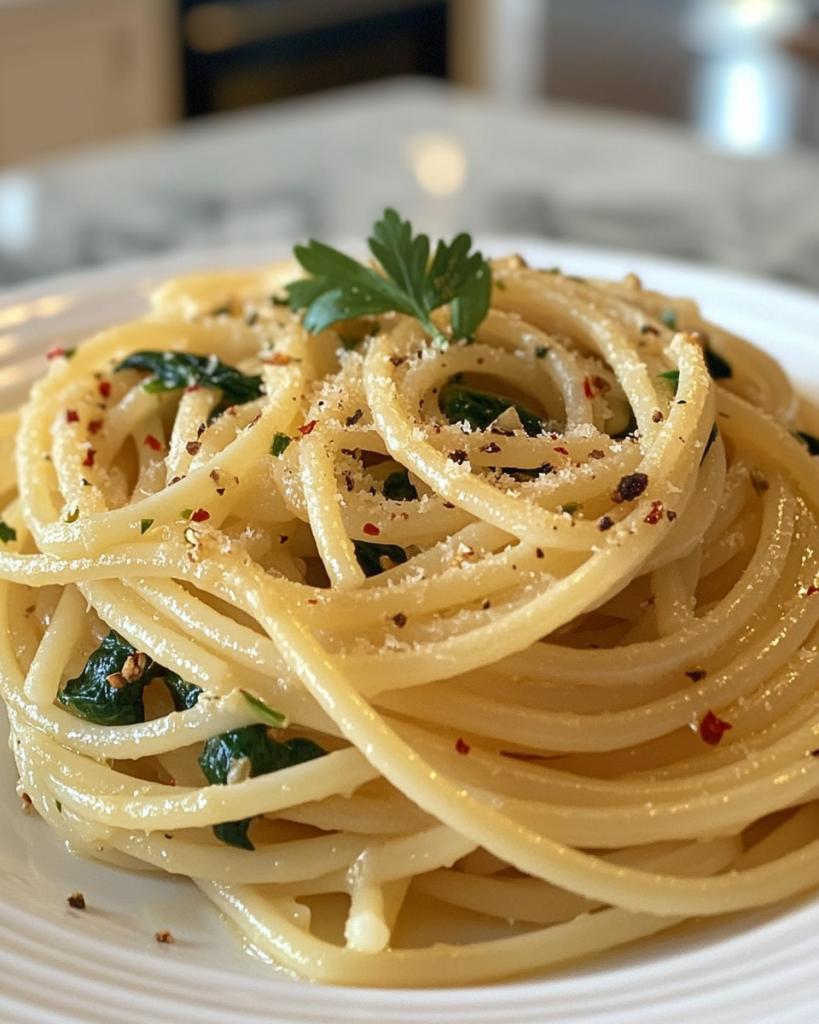
This garlic olive oil pasta with spinach is a warm, comforting dish built around pantry staples and fresh greens. It brings together tender pasta, gently sautéed garlic, and silky spinach in a light olive oil base that coats every strand without feeling heavy. The result is a balanced meal that works well for busy weeknights or quiet dinners at home.
Garlic olive oil pasta with spinach is known for its clean flavor profile. The garlic infuses the oil, creating a fragrant base, while the spinach adds color and a soft texture that blends naturally with the pasta. A touch of pasta water helps bring everything together into a glossy finish that clings to each bite.
Simple ingredients come together in a way that feels both comforting and satisfying. This dish relies on timing and gentle heat to bring out the best in each component, making it a dependable option when you want something warm and nourishing without complicated steps.
Ingredients Overview
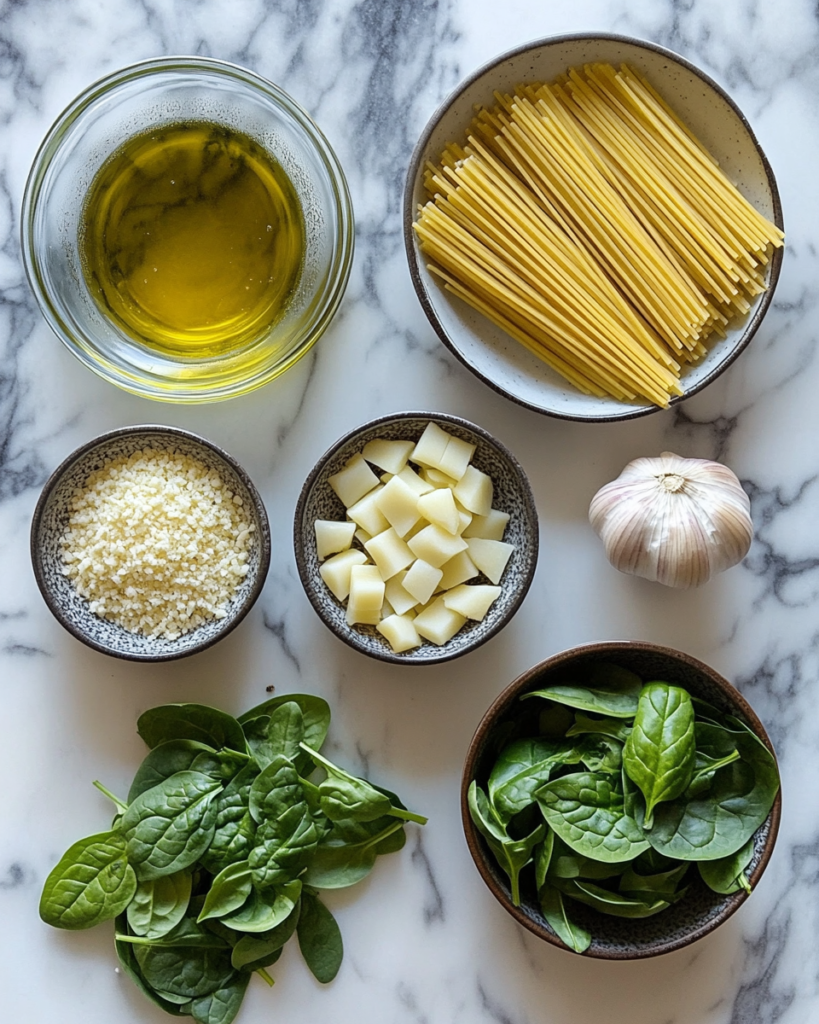
Garlic olive oil pasta with spinach is built on a short list of ingredients, but each one plays an important role. Olive oil forms the base of the sauce, carrying the flavor of garlic throughout the dish. Choosing a good quality olive oil helps create a smooth, rich coating for the pasta without feeling heavy.
Garlic is the centerpiece of flavor. When cooked gently in olive oil, it softens and releases a fragrant aroma that defines the entire dish. Slicing the garlic thinly allows it to cook evenly and prevents bitterness.
Spinach adds freshness and a soft, tender bite. It wilts quickly in the pan, blending into the pasta while still keeping its color. Fresh spinach works best, though baby spinach is especially convenient since it cooks down evenly.
Pasta acts as the foundation. Long noodles like spaghetti or linguine are commonly used because they hold the oil-based sauce well. However, short pasta shapes like penne can also work if preferred.
Red pepper flakes, salt, and black pepper provide balance and subtle heat. A bit of reserved pasta water helps bind everything together, creating a light sauce that clings to the pasta without cream or butter. Parmesan cheese can be added at the end for a savory finish, though it is optional.
Ingredients
12 ounces spaghetti or linguine
4 tablespoons olive oil
5 cloves garlic, thinly sliced
5 cups fresh spinach leaves
1 teaspoon salt
1/2 teaspoon black pepper
1/4 teaspoon red pepper flakes
1/2 cup reserved pasta water
1/3 cup grated Parmesan cheese (optional)
Step-by-Step Instructions
Start by bringing a large pot of salted water to a boil. Add the pasta and cook until just al dente according to package directions. Before draining, reserve about 1/2 cup of the pasta water, as it will help form the sauce later. Drain the pasta and set it aside while preparing the sauce.
In a large skillet, pour the olive oil and warm it over low to medium heat. Add the sliced garlic and cook slowly, stirring often. The goal is to soften the garlic and release its aroma without letting it brown too quickly, which can lead to a bitter taste.
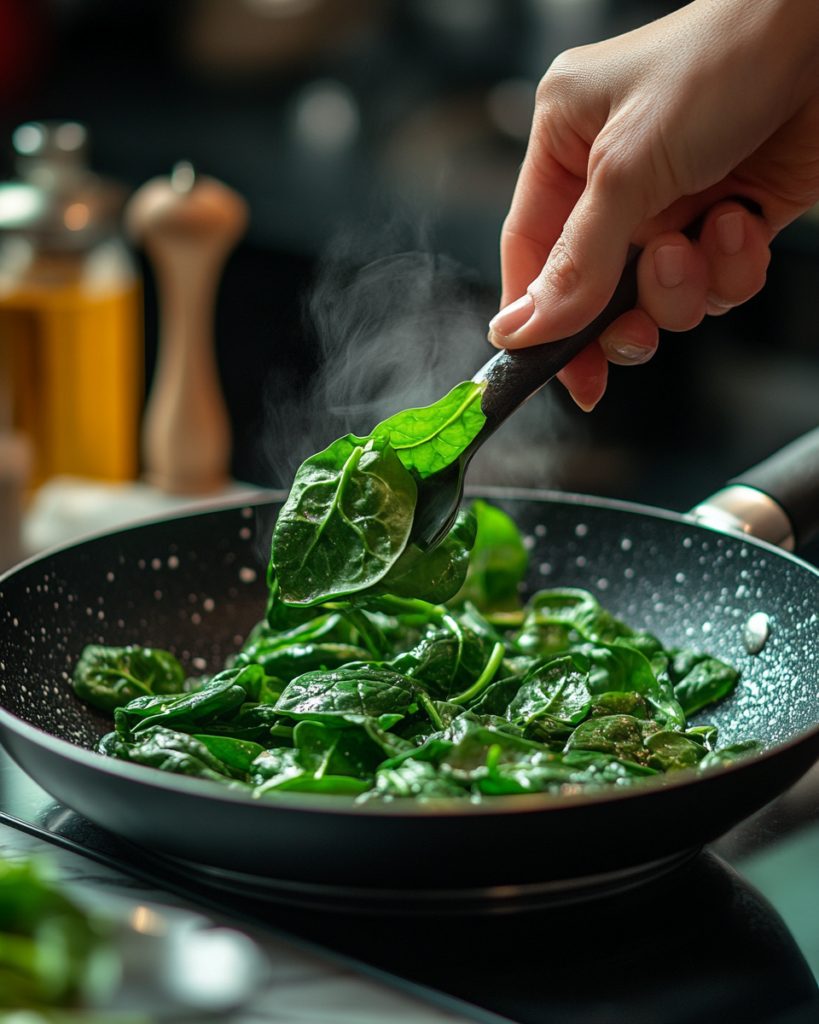
Once the garlic becomes fragrant and lightly golden, add the red pepper flakes. Stir for a few seconds to allow the heat to infuse into the oil. Add the spinach in batches, stirring gently as it wilts. The spinach will shrink significantly, blending into the oil and garlic mixture.
Add the cooked pasta directly into the skillet. Toss everything together so the pasta is coated in the flavored oil. Pour in a small amount of reserved pasta water, starting with a few tablespoons, and continue tossing. The starch in the water helps create a light sauce that binds the ingredients.
Season with salt and black pepper, adjusting gradually. If the pasta seems dry, add a bit more pasta water until the texture becomes silky and cohesive. Keep the heat low during this step to avoid overcooking the spinach or drying out the pasta.
Remove the skillet from heat and, if using, sprinkle grated Parmesan cheese over the pasta. Toss once more so the cheese melts into the warm noodles. Serve immediately while the texture is soft and the aroma is fresh.
Tips, Variations & Substitutions
Cooking garlic gently is key in garlic olive oil pasta with spinach. High heat can cause garlic to brown too fast, leading to a sharp taste. Keeping the flame low allows the flavor to develop slowly in the oil.
For variation, cherry tomatoes can be added for a touch of acidity and color. They can be sautéed alongside the garlic until they begin to soften. Mushrooms also work well, adding an earthy depth to the dish.
Whole wheat pasta or gluten-free pasta can be used without changing the cooking method. The olive oil base pairs well with many pasta types, so adjustments are flexible depending on preference.
For extra richness, a small knob of butter can be stirred in at the end, though the dish is traditionally made without it. If a stronger flavor is preferred, a pinch more red pepper flakes can be added during cooking.
Serving Ideas & Occasions
Garlic olive oil pasta with spinach works well as a main dish or a side alongside grilled chicken, fish, or roasted vegetables. It also pairs nicely with a simple salad dressed in lemon vinaigrette.
This dish is often served as a quick dinner option due to its short cooking time and minimal ingredients. It also fits well into casual gatherings where a warm pasta dish is needed without extensive preparation.
A glass of sparkling water with lemon or a light herbal tea complements the flavors without overpowering the dish. It can also be served as part of a larger spread featuring other Mediterranean-style dishes.
Nutritional & Health Notes
Garlic olive oil pasta with spinach offers a balanced mix of carbohydrates, fats, and greens. Olive oil provides monounsaturated fats, while spinach contributes fiber, vitamins, and minerals.
Garlic adds flavor without additional calories, making it a useful ingredient for building depth in simple dishes. Pasta supplies energy through carbohydrates, making this meal satisfying and suitable for lunch or dinner.
Portion size plays an important role in maintaining balance. Adding extra vegetables such as spinach or tomatoes can increase the nutrient content while keeping the dish light.
FAQs
Can I use frozen spinach instead of fresh?
Frozen spinach can be used in garlic olive oil pasta with spinach, though it has a softer texture and higher moisture content. If using frozen spinach, thaw it completely and squeeze out excess water before adding it to the skillet. This prevents the dish from becoming watery. The flavor will still blend well with garlic and olive oil, but the texture will be less firm compared to fresh spinach. It remains a practical option when fresh spinach is not available.
What type of pasta works best for this recipe?
Long pasta shapes such as spaghetti or linguine work best because they hold the light oil-based sauce evenly. The strands allow the garlic-infused oil to coat each bite. However, short pasta like penne or fusilli can also be used if preferred. The key is to cook the pasta al dente so it holds its structure when tossed with the sauce.
Can I make this dish without cheese?
Yes, garlic olive oil pasta with spinach can be made without cheese. The olive oil and garlic provide enough flavor on their own. The dish remains light and suitable for dairy-free diets. If a bit of extra richness is desired, a small amount of plant-based cheese alternative can be used, though it is not required.
How do I prevent the garlic from burning?
Keeping the heat low is the most important step. Garlic cooks quickly and can turn bitter if exposed to high heat. Stir it frequently and remove the skillet from direct heat if it begins to brown too fast. The goal is a light golden color and a soft aroma rather than deep browning.
Can I add protein to this pasta?
Yes, grilled chicken, shrimp, or white beans can be added to increase protein content. These ingredients should be cooked separately and added at the end to blend with the pasta. This keeps the texture consistent while adding more substance to the dish.
Is this recipe suitable for meal prep?
Garlic olive oil pasta with spinach can be stored for short-term meal prep. Keep it in an airtight container in the refrigerator for up to two days. When reheating, add a small splash of water or olive oil to loosen the pasta and restore its texture.
What other vegetables can be added?
Zucchini, cherry tomatoes, or bell peppers can be added for extra variety. These vegetables should be cooked until just tender so they blend well with the garlic and spinach base. Each addition slightly changes the flavor profile while keeping the dish light and flexible.